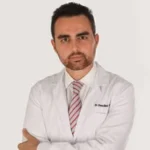
Dr. Álvaro González Cantero, MD, PhD
Psoriasis care for international patients and expats
In-person consultations and telemedicine
Grupo Pedro Jaén | Madrid, Spain

International dermatology care
Clinical expertise, research and advanced treatments for patients worldwide
When psoriasis remains difficult to control, follows a complex course or calls for challenging treatment decisions, some patients look beyond their home country for a more specialised assessment.
Dr. Álvaro González Cantero sees international patients who would like a thorough review of their diagnosis, wish to explore further treatment options or are seeking a second opinion. His practice also welcomes expatriates living in Spain who need specialist dermatological care.
His work brings together clinical practice, research, university teaching and regular contributions as a speaker at scientific conferences and expert meetings around the world.
He leads the Psoriasis and Inflammatory Skin Diseases Unit at Grupo Pedro Jaén, carries out clinical and research work at Ramón y Cajal University Hospital, and contributes to research conducted at ICMR (International Center for Medical Research), a dermatology research centre of the Pedro Jaén Foundation.
He is also an Associate Professor in the Department of Medicine at Universidad Francisco de Vitoria. His background includes clinical observerships at Baylor University Medical Center in Dallas and the University of Pennsylvania, as well as ongoing exchanges with dermatologists and researchers internationally.
His patients include people with mild or moderate psoriasis that remains inadequately controlled, alongside those with severe or particularly complex disease. In-person appointments and telemedicine can be combined, where appropriate, to make assessment and follow-up more practical for patients living abroad.

Clinical experience, scientific rigour and individualised assessment guide care.
A 360-degree approach
Psoriasis: more than a skin condition
A major focus of Dr. González Cantero's research has been the relationship between psoriasis, systemic inflammation and associated health conditions.
Some people with psoriasis have an increased risk of conditions such as psoriatic arthritis, cardiovascular disease, fatty liver disease and metabolic disorders.
This research underpins an integrated approach that considers more than the visible skin lesions. It aims to identify relevant comorbidities and risk factors early, and to support prevention, further assessment and appropriate management whenever needed.
This approach is relevant both to mild or moderate psoriasis that is difficult to manage and to more severe or complex cases in which advanced therapies may need to be considered.
Treatment decisions are individualised, taking into account disease activity, previous therapies, associated conditions and each patient's circumstances.


Some patients choose to have a video consultation before deciding whether to travel to Spain.
Care for patients living abroad
International psoriasis consultations in four steps
Dr. González Cantero receives consultation enquiries from people living in different parts of the world who are looking for a specialist assessment of their psoriasis.
A four-step process helps patients arrange an initial appointment, share relevant medical records and understand the available follow-up options.
Telemedicine can be particularly useful for some second opinions, initial assessments and follow-up appointments, although it cannot replace an in-person examination in every case.
Some patients choose to have a video consultation before deciding whether to travel to Spain. Others arrange an in-person appointment at Grupo Pedro Jaén from the outset.
1. Enquiry and consultation request
The first step is to contact our team to request information about an international consultation.
You can email info@drgonzalezcantero.com or telephone Grupo Pedro Jaén on +34 91 431 78 61.
Our team will provide information about consultation fees, appointment availability and the consultation request form.
Based on the information supplied, the team will assess whether an initial telemedicine appointment may be appropriate or whether an in-person assessment is preferable. Video consultations are not suitable for every clinical situation, and availability may also depend on the country from which the consultation is requested.
2. Appointment booking and medical records
Once an appointment has been arranged, our team will explain which documents would be useful to provide in advance.
- Psoriasis patient questionnaire: information about the course of the condition, symptoms, previous treatments and relevant medical history.
- Clinical photographs: recent images of affected areas to help assess the location, extent and appearance of the lesions.
- Recent blood test results: if available and relevant to the individual case.
- Previous medical reports: dermatology records or reports from other specialists that may help to explain the medical history.
Documents should be submitted using the process indicated by our team. Reviewing the available information beforehand helps the doctor understand the key issues and allows the appointment to focus on the questions and decisions that matter most.
3. Your telemedicine appointment with Dr. González Cantero
The first consultation provides an opportunity to review the history of the condition, previous treatment responses and the main questions that have prompted the patient to seek specialist advice.
Depending on the case, the discussion may cover diagnosis, disease severity, likely course, associated health conditions and possible treatment options.
The benefits, limitations and potential risks of appropriate therapies are also discussed. The aim is to help the patient understand their condition and make informed decisions about the next steps.
If the information available remotely is insufficient for a particular assessment or treatment decision, an in-person examination may be recommended.
4. After your first appointment
Psoriasis is a chronic condition, and follow-up should reflect each patient's clinical needs and response to treatment. After the first consultation, several approaches may be appropriate:
- Telemedicine follow-up: online reviews when the clinical circumstances and conditions of care allow.
- In-person follow-up in Madrid: an appointment at Grupo Pedro Jaén if a direct examination, additional testing or broader assessment is needed.
- Follow-up with a local doctor: patients living abroad may continue their main care with their usual dermatologist or medical team, with Dr. González Cantero providing a specialist second opinion when appropriate.
This last option may also be helpful for expats and people who live or work between countries, as it takes account of different healthcare systems, access to medication and realistic follow-up arrangements.
If a visit to Madrid is needed, our team can provide practical information to help patients prepare for their appointment.

Dr. Álvaro González Cantero
Medical registration number: 454505859
Appointments at Grupo Pedro Jaén


Consultation options: in-person appointments, telemedicine and second opinions.
Specialist dermatology care
Grupo Pedro Jaén: a highly specialised clinical setting
Grupo Pedro Jaén has an established track record in clinical dermatology, research and the care of people with skin conditions that call for specialist assessment.
Within the group, the Psoriasis and Inflammatory Skin Diseases Unit, led by Dr. González Cantero, provides an integrated approach for patients whose psoriasis remains difficult to control or whose treatment strategy needs to be reviewed.
Clinical experience, scientific rigour and individualised assessment guide care, taking into account both the condition itself and its impact on the patient's daily life.
For those travelling from abroad, an in-person appointment at Grupo Pedro Jaén offers access to dermatological assessment and, when clinically appropriate, diagnostic resources and collaboration with other specialists.

Mild, moderate and severe psoriasis
Treatment options for psoriasis
Several treatments are available for psoriasis, ranging from topical therapies and phototherapy to systemic medications and biologic therapies.
Not every option is suitable for every patient. A key part of the Unit's work is to assess which approach may be appropriate, taking into account disease severity, affected areas, previous treatment response and associated medical conditions.
Available treatment approaches and areas of assessment include:
- Topical and systemic medication.
- Biologic therapies when clinically indicated.
- Phototherapy, including assessment of home-based options in suitable cases.
- Targeted procedures for particular sites, including injections or laser techniques when appropriate.
- Assessment of comorbidities associated with psoriasis.
- Nutritional assessment and lifestyle guidance.
Nail, scalp, palmoplantar and other difficult-to-treat forms of psoriasis may require an approach tailored to the affected area.
Dr. González Cantero places particular emphasis on explaining the available options, their potential benefits and risks, and the treatment goals that are reasonable for each patient. Shared decision-making is an essential part of this approach.


Clinical, academic and scientific activity


Consultations in English and Spanish
Psoriasis consultations for international patients and expats
Dr. González Cantero offers consultations in English and Spanish, helping patients from different countries discuss their condition, treatment history and care options clearly.
Whether you need a second opinion, would like to review previous treatments or are considering an in-person visit, our team can explain how to request an appointment and prepare for your consultation.
Dr. Álvaro González Cantero | Grupo Pedro Jaén, Madrid, Spain