
Hidradenitis suppurativa treatment in Madrid (Spain)
Dr Álvaro González Cantero
Comprehensive management of a complex inflammatory disease that can have a significant impact on quality of life
Hidradenitis suppurativa is a chronic inflammatory skin disease that can have a significant emotional impact and substantially affect patients’ quality of life because of the symptoms it causes.
As with other inflammatory diseases, there is also increasing evidence that hidradenitis suppurativa may be associated with other conditions, known as comorbidities, including cardiovascular disease, diabetes and inflammatory bowel disease.
Important advances have been made in the treatment of hidradenitis suppurativa in recent years, and promising research into new therapeutic options is ongoing. However, many patients are still unaware of some of the treatment options currently available.
This led me to develop a comprehensive approach to hidradenitis suppurativa that combines access to current treatment options with assessment of potential comorbidities, attention to the different concerns associated with the disease and, where appropriate, information about ongoing research into new therapies through my work at the dermatology research centre ICMR and Hospital Universitario Ramón y Cajal.
As a dermatologist specialising in the treatment of hidradenitis suppurativa, my aim is to provide each patient with the most appropriate therapeutic options while addressing the different challenges that the disease may cause in everyday life.
Access to advanced treatment options currently available
What is hidradenitis suppurativa?
Hidradenitis suppurativa is a chronic inflammatory disease affecting the skin, particularly areas exposed to friction and moisture such as the armpits, groin, genital area, buttocks and the area beneath the breasts.
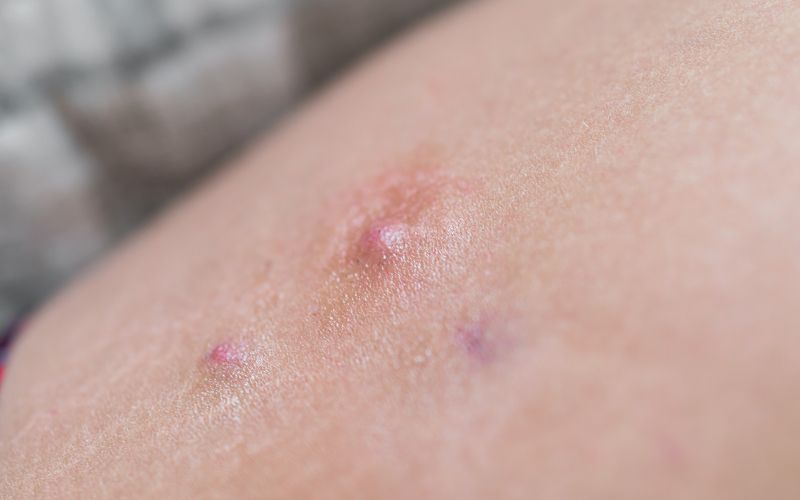
It commonly presents with painful nodules, abscesses and inflammatory lesions that may rupture, discharge and leave scars. In some patients, the disease appears intermittently or affects only limited areas. In others, it follows a persistent or recurrent course and can have a considerable impact on everyday life.
The condition is also commonly abbreviated as HS and is now understood to involve a complex inflammatory process.
Severity and progression
The severity of hidradenitis suppurativa varies considerably between patients.
Some people experience relatively limited disease, with occasional flare-ups and painful lesions that have a more moderate impact on everyday life. In other patients, abscesses recur, lesions fail to resolve completely, tunnels and scarring develop, and the disease can significantly affect mobility, clothing choices, work, sleep, social life and emotional wellbeing.
It usually begins after puberty and, in many patients, follows a chronic course. This is why it is important not to underestimate the condition and to assess each case carefully from the outset.
Symptoms
Hidradenitis suppurativa may cause a range of symptoms, including:
- painful nodules or lumps;
- abscesses;
- discharge;
- persistent inflammatory lesions;
- tunnels or sinus tracts;
- scarring;
- persistent or recurrent pain;
- unpleasant odour in some cases;
- and a significant associated emotional impact.
One common difficulty is that, particularly in the early stages, these lesions may be mistaken for infections, cysts or isolated boils. Their characteristic location, recurrence and progression over time can, however, help establish the correct diagnosis.
Diagnosis and individual assessment
The diagnosis of hidradenitis suppurativa is based primarily on the medical history, physical examination and careful assessment of the type of lesions, their location and their clinical course.
In some cases, additional investigations may be helpful, including:
• skin ultrasound;
• blood tests;
• biopsy, when required;
• microbiological testing, when indicated;
• and assessment of associated comorbidities.
My aim is not simply to confirm the diagnosis, but to assess accurately the severity and extent of the disease, the frequency of flare-ups, the presence of scarring or tunnels, its impact on quality of life and the patient’s overall clinical context.
What causes hidradenitis suppurativa?
The precise causes of hidradenitis suppurativa are not fully understood, but we do know that it is not caused by poor hygiene and is not contagious.
Current evidence indicates that it has a complex inflammatory basis involving a number of factors, including:
- genetic predisposition;
- immune system abnormalities;
- persistent inflammatory processes;
- possible hormonal factors;
- smoking;
- overweight or obesity;
- friction;
- and other metabolic or environmental factors.
The disease appears to begin in the hair follicle, leading to deeper inflammation within the skin and the development of recurrent painful lesions. Not every patient has the same contributing factors or follows the same clinical course, which is why an individual assessment is important.
The importance of early diagnosis
As with many chronic inflammatory diseases, early diagnosis is important.
Recognising hidradenitis suppurativa at an early stage allows treatment to begin sooner, helps reduce symptoms and may limit progressive tissue damage and the development of scars, tunnels and lesions that are more difficult to manage. In some patients, earlier intervention may also reduce the need for more complex or invasive treatment later in the course of the disease.
Despite this, diagnostic delay remains common. Specialist dermatological assessment can therefore be particularly valuable when hidradenitis suppurativa is suspected.
Comorbidities and a comprehensive view of the disease
Hidradenitis suppurativa should not be considered solely as a localised skin problem. We increasingly recognise that, in some patients, it may be associated with other inflammatory or metabolic conditions that can also influence disease progression, general health and quality of life.
Relevant comorbidities may include:
- metabolic syndrome;
- diabetes;
- cardiovascular disease;
- inflammatory bowel disease;
- and other conditions that may affect the patient’s overall health.
This means that, in some cases, treating an individual lesion, draining an abscess or managing a single flare-up is not enough. Appropriate management may also require consideration of the patient’s wider health, identification of associated conditions and assessment of factors that may be contributing to persistent or worsening inflammation.
These comorbidities can have important medium- and long-term implications for both disease progression and general health. When clinically appropriate, I therefore consider a comprehensive approach to hidradenitis suppurativa essential, addressing not only visible lesions but also the early detection and management of associated health problems.
Dermatologist specialising in hidradenitis suppurativa treatment in Madrid (Spain)
Hidradenitis suppurativa treatment
There is no single treatment strategy that is appropriate for every patient. Treatment should be tailored according to disease severity and location, the presence of scars or tunnels, pain, impact on quality of life and the response to previous treatments.
Management may include different therapeutic approaches, such as:
- medication;
- local measures and specific skin care;
- drainage of selected lesions;
- laser procedures in selected cases;
- advanced therapies;
- surgery, when indicated;
- and measures aimed at reducing flare-ups and controlling aggravating factors.
The aim is not simply to treat an individual abscess or flare-up, but to develop an overall strategy that provides better long-term disease control and reduces its impact on the patient’s life.
Treatment according to disease stage
The stage and progression of the disease are important factors when deciding on the most appropriate treatment strategy.
In the early stages, different medical treatments and measures aimed at reducing inflammation and limiting progression may be appropriate.
At intermediate stages, treatment may require longer-term therapy, procedures targeting active lesions and, in some cases, specific treatment of persistent areas or tunnels.
In advanced or particularly complex disease, medication may need to be combined with surgery and other procedures in order to reduce inflammatory burden, improve function and limit recurrence.
This is why a thorough initial assessment is important: it helps determine the most appropriate therapeutic strategy at each stage of the disease.
Complex cases and advanced therapies
Important advances have been made in the treatment of hidradenitis suppurativa in recent years, particularly for moderate and severe disease.
Advanced therapies are now available that can provide better inflammatory disease control and reduce the frequency and severity of flare-ups in appropriately selected patients. The important issue is not simply having access to these options, but understanding when they are indicated, how they should be incorporated into the overall treatment plan and how follow-up should be adjusted according to the patient’s response.
This careful therapeutic judgement is particularly important in complex cases.

Dr Álvaro González Cantero
Medical registration number: 454505859
Dermatologist specialising in hidradenitis suppurativa in Madrid (Spain)

Therapeutic advances and investigational options
For most patients, the priority is to achieve the best possible disease control using currently approved and appropriately indicated treatments.
However, for selected patients with complex hidradenitis suppurativa or an inadequate response to conventional treatments, it may also be appropriate to consider investigational options within a medically, ethically and scientifically supervised setting.
This possibility forms part of the clinical and research activity I carry out at Hospital Universitario Ramón y Cajal and ICMR (International Center for Medical Research), the research centre of Fundación Pedro Jaén. This work allows me to remain closely involved with emerging therapeutic strategies and, for selected patients, to assess whether participation in ongoing research into hidradenitis suppurativa and other inflammatory skin diseases may be appropriate.
Clinical research does not replace approved treatments and is not suitable for every patient. However, it may represent an additional option in selected cases, particularly when the disease continues to have a significant impact despite appropriate treatment.
Complementary measures and lifestyle
In addition to medical treatment, certain complementary measures may help reduce the impact of the disease and improve everyday management.
These may include:
- avoiding smoking;
- maintaining a healthy weight where possible;
- reducing friction by wearing loose-fitting clothing;
- caring for the skin with appropriate hygiene measures;
- avoiding excessive heat and humidity where possible;
- and maintaining healthy lifestyle habits that may help reduce factors associated with worsening inflammation.
These measures do not replace medical treatment, but they may contribute to better disease control and help reduce the frequency or severity of flare-ups. During consultations, recommendations are adapted to each patient’s individual circumstances.
When can specialist assessment be particularly helpful?
Specialist assessment of hidradenitis suppurativa may be particularly useful when:
- flare-ups are frequent or lesions persist;
- there is pain, discharge or scarring;
- the disease has a significant impact on everyday life;
- previous treatments have not provided adequate control;
- there is uncertainty about the diagnosis;
- it may be appropriate to consider a more advanced treatment;
- there are concerns about possible associated conditions or comorbidities;
- or a second opinion is required for a complex case.
In-person consultations in Madrid, second opinions and online consultations
Consultations are available in person at Grupo Pedro Jaén in Madrid or online when the nature of the case allows an appropriate remote assessment.
A second opinion consultation may also be particularly useful for patients with difficult-to-control hidradenitis suppurativa, diagnostic uncertainty or a need to review important treatment decisions.
In every case, the aim is to provide a rigorous and personalised assessment focused on achieving better disease control.
Dr Álvaro González Cantero
Consultations at Grupo Pedro Jaén


If you are looking for a specialist in hidradenitis suppurativa
If your hidradenitis suppurativa is not adequately controlled, you experience frequent flare-ups, pain or discharge that is affecting your everyday life, or you would like a more detailed review of your current treatment, I can assess which therapeutic strategy may be most appropriate for your case.
The aim is not simply to treat each individual flare-up, but to understand the disease properly and develop a strategy that can improve both disease control and quality of life.
Más información relacionada
Si quieres conocer cómo funciona una revisión diagnóstica y terapéutica más compleja, puedes consultar el apartado de Consulta de segunda opinión en dermatología.
Si quieres saber cómo acceder a una valoración a distancia, puedes consultar el apartado de Consulta online.
Si quieres conocer mejor los ensayos clínicos y la investigación en enfermedades inflamatorias de la piel, puedes consultar el apartado de Ensayos clínicos en psoriasis y otras enfermedades inflamatorias de la piel.
Si quieres, la siguiente revisaría consulta presencial para dejar cerrada la parte asistencial, o apariciones en medios para seguir reforzando autoridad.