Biological Therapy for Psoriasis in Madrid (Spain)
Dr Álvaro González Cantero
Advanced therapies for patients who require a precise, safe and well-targeted treatment strategy
Biological therapy has transformed the treatment of psoriasis. These therapies now allow us to achieve substantially higher levels of disease control in many patients with moderate, severe or difficult-to-manage psoriasis than were possible in the past, with a favourable safety profile when appropriately prescribed and monitored.
However, the real value of biological therapy lies not simply in having advanced treatments available. It lies in knowing which treatment is most appropriate for each patient, when it should be introduced, what the therapeutic goals should be, how the response should be monitored and what to do if that response is insufficient or changes over time.
For this reason, the use of biological therapy requires experience, a comprehensive understanding of the disease and clinical decisions carefully tailored to each patient’s individual circumstances.
What is biological therapy?
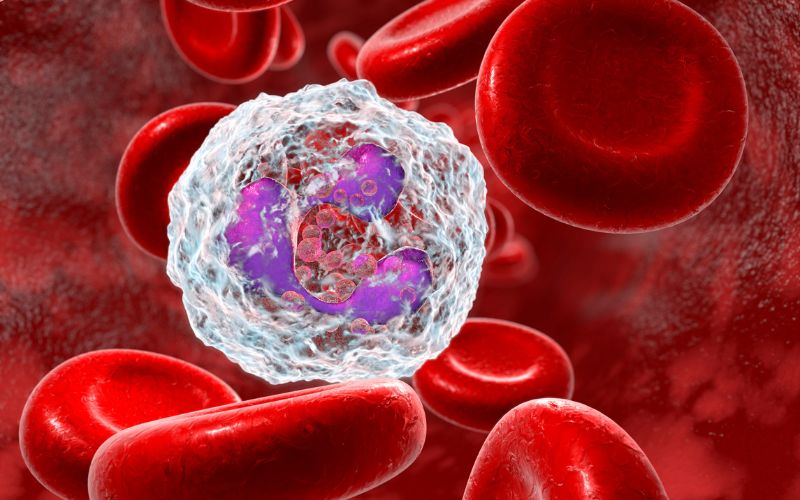
Biological therapies are medicines designed to act on specific mechanisms of the immune system involved in psoriasis.
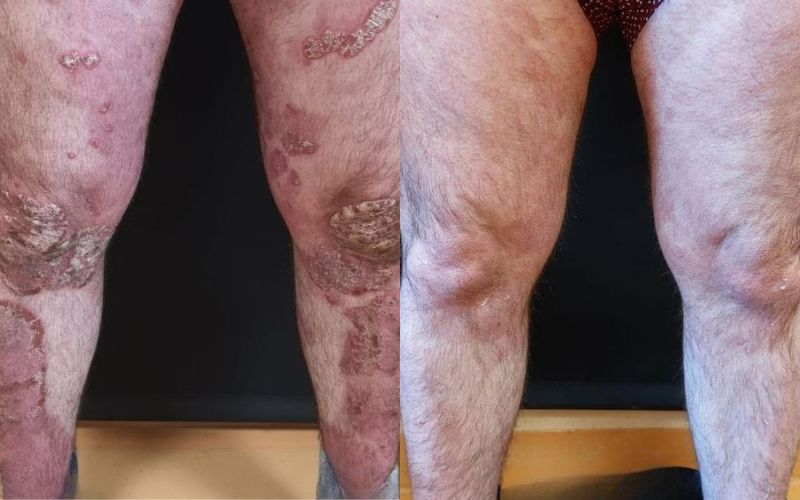
By targeting particular inflammatory pathways, these treatments can control the disease with a high degree of precision and achieve substantial responses in many patients. In some cases, this can result in a very significant reduction in skin lesions and even near-complete or complete skin clearance.
Beyond their effect on psoriasis plaques, biological therapies have also provided new treatment options for patients with complex disease, certain associated comorbidities or a substantial impact on quality of life.
When may biological therapy be indicated?
Biological therapy is most commonly considered in patients with moderate or severe psoriasis, but the decision is not based solely on the extent of skin involvement.
We now know that the real impact of the disease on a patient’s daily life, the location of lesions and an inadequate response to other therapeutic strategies also need to be considered carefully.
Biological therapy may therefore be particularly relevant in situations such as:
- difficult-to-control psoriasis;
- inadequate response to previous therapies;
- failure or insufficient control with appropriately prescribed topical treatments;
- intolerance of or contraindications to other systemic treatments;
- a significant impact on quality of life;
- psoriasis affecting high-impact areas such as the hands, feet, face, scalp or genital area;
- the presence of certain comorbidities;
- the need for a more effective, sustainable treatment strategy better adapted to the individual case.
Not every patient with moderate or severe psoriasis requires the same treatment, and not every patient who may benefit from an advanced therapeutic strategy can be identified solely by the extent of their disease. This is why specialist assessment is so important.

Dermatologist specialising in biological therapy for psoriasis
It is not simply a matter of prescribing a biological therapy, but of selecting it appropriately
One of the most important aspects of managing these therapies is understanding that there is no single option that is equally appropriate for every patient.
In clinical practice, the difference often lies not in having access to the medicine, but in knowing:
• which option may be most appropriate for the individual patient;
• which factors make one therapy preferable to another;
• when treatment should be started;
• how to assess the response realistically;
• when treatment should be maintained, adjusted or changed;
• and how to optimise the strategy if the response decreases over time.
This degree of therapeutic precision is an important part of managing the available treatment options and is particularly relevant in patients with complex medical histories, previous treatment failures or clinical circumstances requiring more nuanced decisions.
How is biological therapy administered?
The route of administration depends on the specific therapy. Most biological treatments currently used for psoriasis are administered by subcutaneous injection and, in many cases, patients can administer the treatment themselves once they have received appropriate instructions.
The frequency of administration also varies according to the medicine and prescribed regimen. It may range from injections every few weeks to longer intervals with certain therapies.
The objective, however, is not simply to start treatment. Biological therapy should be properly integrated into the overall follow-up plan, and patients should understand clearly how and when to use it.
A therapy that should form part of a comprehensive view of the disease
Psoriasis does not always stop at the skin. In many patients, the inflammatory process may be associated with other health conditions, including psoriatic arthritis, increased cardiovascular risk, metabolic syndrome and fatty liver disease.
For this reason, when I consider biological therapy, I do not view it as an isolated decision. I assess it within a broader strategy that takes into account:
- the patient’s overall clinical situation;
- the possible presence of comorbidities;
- the impact of the disease on health and quality of life;
- and realistic short- and long-term therapeutic goals.
This approach supports safer, more personalised decisions that are better aligned with what each patient actually needs.
Possible side effects and precautions
As with any medical treatment, biological therapy can be associated with side effects and requires certain precautions.
In general, the most common adverse effects are mild and do not prevent treatment from continuing in most patients. Even so, each situation should be assessed carefully, patients should receive clear information and appropriate medical follow-up should be maintained.
It is also important to review issues such as:
- active infections or a relevant history of infection;
- pregnancy planning or breastfeeding;
- vaccination;
- the development of new symptoms during treatment;
- the need for blood tests or other monitoring investigations.
A treatment of this type should not be managed automatically or through a rigid protocol. It should form part of an individualised and appropriately supervised treatment strategy.
Is biological therapy safe?
Overall, biological therapy has a favourable safety profile when appropriately prescribed and correctly monitored.
Before treatment is started, a complete medical assessment is essential. This includes reviewing the patient’s medical history, identifying possible contraindications and carrying out the necessary investigations. This initial assessment is a fundamental part of the process and helps us select the most appropriate treatment while reducing avoidable risks.
Although these therapies are generally safe, they are not all the same and they do not all have identical characteristics. Safety therefore depends not only on the medicine itself, but also on appropriate patient selection, the clinical context in which it is used and subsequent follow-up.
An approach that goes beyond the extent of psoriasis
For many years, the most advanced psoriasis treatments were reserved primarily for patients with very extensive disease. Today, although traditional measures of severity remain important, we know that this criterion alone may be insufficient.
The location of psoriasis, its impact on quality of life and whether more conventional treatments have provided adequate control also matter. Some patients may have relatively limited skin involvement but lesions in particularly disabling areas, or may have remained poorly controlled despite prolonged use of topical therapies and other standard approaches.
A specialist assessment should therefore consider not only how much skin is affected, but also the nature of that involvement and the real impact of the disease on the patient’s life.
A therapy that should form part of a comprehensive view of the disease
Psoriasis does not always stop at the skin. In many patients, the inflammatory process may be associated with other health conditions, including psoriatic arthritis, increased cardiovascular risk, metabolic syndrome and fatty liver disease.
For this reason, when I consider biological therapy, I do not view it as an isolated decision. I assess it within a broader strategy that takes into account:
- the patient’s overall clinical situation;
- the possible presence of comorbidities;
- the impact of the disease on health and quality of life;
- and realistic short- and long-term therapeutic goals.
This approach supports safer, more personalised decisions that are better aligned with what each patient actually needs.

What happens if a biological therapy stops working or does not provide the response we expected?
One of the most important considerations in real-world clinical practice is that patients do not all respond in the same way, and not every therapy maintains the same level of effectiveness over time.
A treatment may work very well from the outset, produce only a partial response or, after initially achieving good control, gradually become less effective. When this happens, the answer is not simply to accept the situation, but to reassess it and make the most appropriate clinical decision.
This may involve:
- reviewing whether treatment has been fully optimised;
- considering appropriate adjustments;
- deciding whether a change in therapeutic strategy is advisable;
- or selecting another treatment that is better suited to the patient’s current clinical situation.
Clinical experience is particularly important at this stage, because managing treatment persistence and selecting appropriate rescue strategies in complex cases are key aspects of expertise in biological therapy.
Biological therapy can achieve good psoriasis control in many patients
Biological therapy and comorbidities
Research in psoriasis has helped us understand more clearly how chronic inflammation can be associated with other organs and systems. For this reason, in selected patients, the effect of biological therapy is not considered solely in terms of improvement in the skin. Treatment should also be understood within a broader strategy addressing inflammatory disease and the patient’s overall health.
This does not mean that every patient should be treated in the same way, or that a particular therapy has the same value in every clinical context. It does, however, reinforce the importance of approaching psoriasis from a broader and more precise clinical perspective.
Who may particularly benefit from specialist assessment for biological therapy?
A specialist assessment may be particularly useful when:
- psoriasis is moderate, severe or difficult to control;
- there is uncertainty about whether the time has come to escalate treatment;
- other treatments have already been tried without achieving the expected response;
- topical therapies or phototherapy have failed;
- psoriasis affects high-impact areas;
- there is significant functional, emotional or social impact;
- there are concerns about safety or possible adverse effects;
- relevant comorbidities are present;
- the patient would like a second opinion on the most appropriate treatment strategy;
- or an existing biological therapy needs to be optimised.
More than access: specialist clinical judgement
Today, the key issue is not simply having access to advanced therapies, but knowing how to use them appropriately.
This means understanding the different available options in depth, recognising how they differ, integrating them into each patient’s clinical context and making precise decisions throughout follow-up.
For patients with complex disease, a substantial impact on quality of life or an inadequate response to more conventional treatments, this level of specialist clinical judgement can be particularly important in achieving better disease control and reducing its impact on everyday life.
Biological therapy within a highly specialised unit
Biological therapy forms part of a broader model of comprehensive psoriasis care. When I prescribe or review biological treatment, I do so within a strategy that considers not only the skin, but also associated comorbidities, the patient’s overall clinical course and the need for appropriately structured long-term follow-up.
This work is carried out within a highly specialised unit for psoriasis and inflammatory skin diseases, supported by clinical practice and research connected with Grupo Pedro Jaén, Hospital Universitario Ramón y Cajal and ICMR.

Dr Álvaro González Cantero
Medical registration number: 454505859
My aim is to minimise the impact of psoriasis on your life
About me
I work as a dermatologist and psoriasis specialist at Hospital Universitario Ramón y Cajal and within the Psoriasis and Chronic Inflammatory Skin Diseases Unit at Grupo Pedro Jaén in Madrid, where I combine clinical practice with research.
I follow a comprehensive model of psoriasis care designed to manage both mild and moderate cases that may be difficult to control in everyday life and more severe or complex cases that require advanced treatment strategies.
Because psoriasis can also be associated with other comorbidities, my approach includes their early identification, prevention and, where necessary, treatment, with the aim of reducing their potential impact on the patient’s overall health.


Dr Álvaro González Cantero