
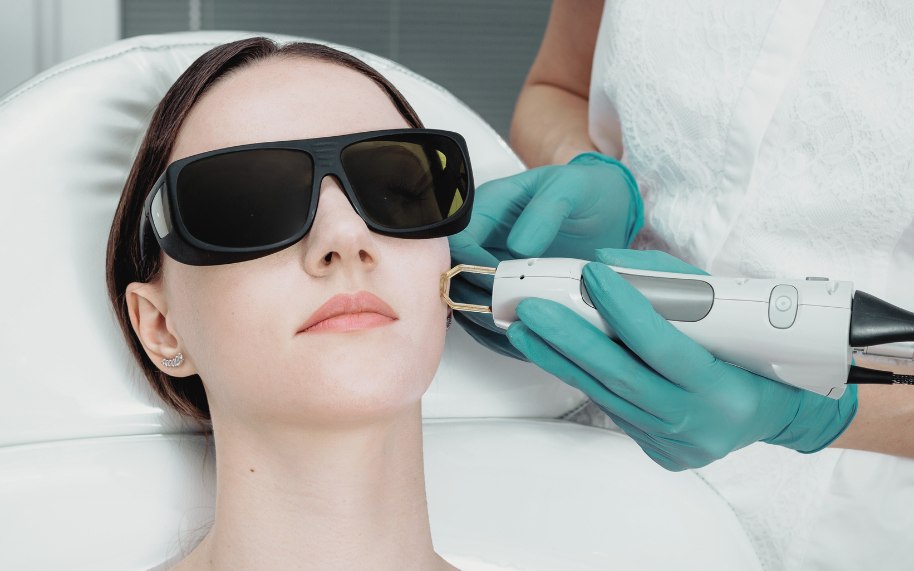
Learn which aesthetic treatments and technologies may be considered in people with psoriasis, including lasers, radiofrequency and medical laser hair removal.
Psoriasis can achieve good disease control in many patients with appropriate treatment and medical follow-up. Even so, people with psoriasis frequently have questions about which aesthetic procedures can be performed when the disease is well controlled, or what precautions should be taken when flare-ups are frequent and the skin is not completely stable.
In this article, I review what is known about aesthetic facial and body procedures in people with psoriasis, which technologies may be considered with caution and which are generally best postponed when the disease is active.
Psoriasis and aesthetic treatments: caution and medical assessment
Skin affected by psoriasis may be more susceptible to irritation and inflammation. Procedures involving friction, heat, repeated trauma or significant disruption of the skin barrier may irritate the skin and, in susceptible patients, trigger new psoriasis lesions through the Koebner phenomenon.
For this reason, before undergoing an aesthetic facial or body treatment, assessment by a dermatologist specialising in psoriasis may be advisable, particularly if the disease is active, unstable or the proposed procedure involves significant skin trauma.
When psoriasis is well controlled and the treatment area is free from active lesions, some medical aesthetic procedures may be considered, provided that the technique, settings and individual skin characteristics are taken into account.
When should an aesthetic procedure be postponed in someone with psoriasis?
During an active flare, or when the skin has plaques, fissures, marked irritation or other signs of inflammation, it is generally advisable to postpone elective aesthetic procedures affecting that area. In these circumstances, physical or chemical trauma may aggravate irritation or trigger new lesions.
Procedures that are usually best avoided over active psoriasis include:
- high-strength or deeply penetrating chemical peels;
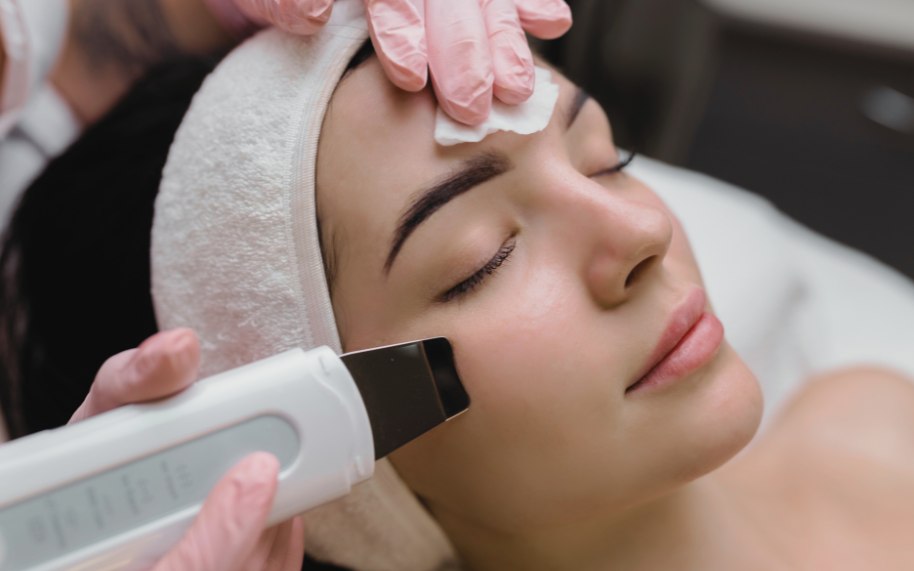
- microdermabrasion or aggressive mechanical exfoliation;
- ablative lasers such as fractional CO₂ laser or Er:YAG laser;
- microneedling or other procedures involving multiple skin punctures;
- laser hair removal or waxing over active lesions.
Once the disease is stable and the skin barrier is intact, less invasive procedures may be considered on an individual basis.
Facial aesthetic treatments in people with psoriasis
When psoriasis is stable, certain facial aesthetic procedures may be possible, provided that they are adapted to the individual patient and are not performed over active lesions. In general, techniques that cause less disruption of the epidermis may be better tolerated than more aggressive resurfacing procedures.
Non-ablative lasers and intense pulsed light
Non-ablative lasers deliver energy to the skin without intentionally removing the epidermal surface. This may reduce tissue disruption compared with ablative resurfacing, although irritation, erythema and inflammatory reactions are still possible.
Examples of technologies that may be considered in selected patients include:
- Nd:YAG laser, depending on the indication and treatment parameters;
- non-ablative fractional lasers, such as some 1540 nm systems, used for selected texture-related indications;
- intense pulsed light (IPL), used for certain vascular or pigmentary concerns and aspects of skin quality.
These procedures should only be performed on skin without active psoriasis and with parameters appropriate to the patient’s skin characteristics and clinical history. The aim is to minimise unnecessary irritation and reduce the risk of triggering inflammation.
Radiofrequency and facial tightening systems
Radiofrequency uses controlled energy to heat tissues at selected depths and is used for different aesthetic indications, including skin laxity. Non-invasive radiofrequency may be considered in selected patients with stable psoriasis when the treatment area is free from active lesions.
Greater caution is required with fractional radiofrequency and radiofrequency microneedling, because these techniques intentionally create multiple points of cutaneous injury and may therefore carry a greater theoretical risk of triggering the Koebner phenomenon.
Other tightening technologies, such as high-intensity focused ultrasound (HIFU) or microfocused ultrasound, act at deeper tissue levels and may be considered in selected patients. However, specific evidence in people with psoriasis is limited, so suitability should be assessed individually rather than assuming that these technologies are universally safe.
Superficial medical peels and skin-quality treatments
Mild or superficial chemical peels may sometimes be considered when psoriasis is stable and the treatment area is unaffected.
The choice of agent, concentration, contact time and frequency should be adapted carefully in order to minimise irritation. Strong acids or aggressive resurfacing should be avoided when there is active or unstable psoriasis. Products used before and after treatment should also be selected according to skin tolerance, preferably avoiding unnecessary irritants when the skin is particularly sensitive.
Body aesthetic treatments and psoriasis: which technologies may be considered?
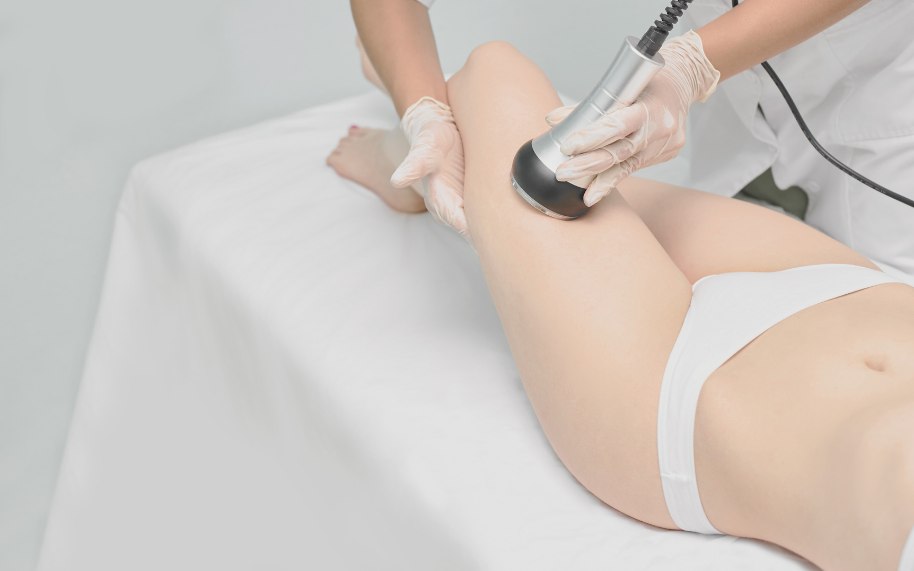
Body aesthetic procedures are used for indications such as skin laxity, texture or localised fat. In people with psoriasis, treatment selection should take into account the activity of the disease, whether the area has been affected recently and the degree of mechanical, thermal or inflammatory stimulus produced by the procedure.
Body radiofrequency
Body radiofrequency may be considered in selected patients when the skin is intact and free from active lesions. Treatment should not be performed over active plaques or markedly irritated skin. As with facial procedures, settings should be adapted conservatively and treatment stopped if significant irritation occurs.
Ultrasound and body-tightening systems
Focused ultrasound technologies act at selected tissue depths and are used for skin-tightening or contouring indications. They may be considered when psoriasis is stable and the treatment area is unaffected. However, because specific evidence in psoriasis is limited, they should not be described as risk-free, and suitability should be assessed individually.
Cryolipolysis
Cryolipolysis uses controlled cooling to reduce localised adipose tissue. There is limited evidence specifically assessing cryolipolysis in people with psoriasis. For this reason, it may be considered only after individual assessment when the skin is healthy, intact and free from recent or active lesions in the treatment area. Any procedure that produces marked local irritation, bruising or inflammation could theoretically act as a trigger in a person susceptible to the Koebner phenomenon.
Non-ablative body lasers
Non-ablative laser systems may be used for a range of vascular, pigmentary or skin-quality indications. Examples include some 1064 nm Nd:YAG laser applications, among other non-ablative body lasers.
As these technologies do not intentionally remove the epidermis, they may cause less disruption than ablative procedures, but they can still produce heat, redness and inflammation. They should therefore be used cautiously and only on unaffected, stable skin.
Laser hair removal and psoriasis
Laser hair removal is one of the procedures most frequently asked about by people with psoriasis. It may be possible when the disease is stable and the treatment area is free from lesions.
The clinician should:
- avoid active or recently inflamed plaques;
- select the laser type and parameters according to skin phototype, hair characteristics and individual tolerance, and consider a small test area when appropriate;
- use suitable post-treatment skin care to minimise irritation.
Laser hair removal should generally be postponed during an active flare or over psoriasis lesions, because thermal and mechanical irritation may contribute to the Koebner phenomenon.
When appropriately selected and performed on stable skin, many people with psoriasis can undergo laser hair removal without complications. However, it should not be described as universally risk-free, and individual assessment remains important.
Aesthetic treatments and psoriasis: ask your dermatologist
Dermatological assessment can be particularly valuable before procedures that generate significant heat, trauma or inflammation.
The dermatologist or appropriately qualified medical professional should consider:
- whether the psoriasis is stable;
- whether the treatment area contains active or recently active lesions, and the likelihood of irritation or Koebner phenomenon;
- the proposed energy, intensity and frequency of treatment, and previous reactions to aesthetic procedures;
- current topical, systemic or biological therapy, coordinating aesthetic procedures with ongoing medical treatment when necessary.
This approach aims to reduce avoidable complications and ensure that the aesthetic procedure does not interfere with appropriate psoriasis management.
Wellbeing and quality of life
Psoriasis can affect body image, self-confidence and psychological wellbeing. For some patients, aesthetic concerns unrelated to active psoriasis may also have a meaningful impact on quality of life.
Addressing these concerns appropriately can form part of patient-centred care. However, aesthetic procedures should not be presented as a treatment for the psychological burden or inflammatory activity of psoriasis.
Although improvements in body image may support wellbeing for some individuals, there is insufficient evidence to assume that aesthetic procedures will reduce psoriasis activity or prevent flare-ups through stress reduction.
Psychological symptoms or significant distress related to psoriasis should be addressed directly when present.
Scientific evidence and medical considerations
The scientific evidence specifically assessing many aesthetic procedures in people with psoriasis remains limited and uneven. For this reason, broad statements that non-ablative or minimally invasive procedures are always safe in controlled psoriasis should be avoided.
Most psoriasis guidelines focus on the diagnosis and medical treatment of the disease rather than providing detailed recommendations for every cosmetic or aesthetic technology. The main principles supported by clinical practice are to avoid treating active psoriasis lesions; minimise unnecessary trauma and irritation; consider the risk of the Koebner phenomenon; assess each procedure according to the technology and treatment depth involved; and individualise treatment according to disease activity and patient characteristics.
Procedures that preserve the epidermal barrier may theoretically carry less risk of triggering psoriasis than ablative or traumatic techniques, but this does not mean that they are completely free from inflammatory effects.
Aesthetic treatments and psoriasis: in summary
People with psoriasis may be able to undergo a range of facial and body aesthetic procedures when the disease is stable and the treatment area is free from active lesions.
Some non-ablative lasers, non-invasive radiofrequency, ultrasound-based technologies, cryolipolysis and laser hair removal may be considered in selected patients. However, the evidence differs considerably between procedures, and none should be regarded as universally safe solely because it is described as “non-invasive” or “non-ablative”. More aggressive, abrasive or skin-penetrating procedures are generally best postponed during active psoriasis.
Careful assessment by a dermatologist or appropriately qualified medical professional allows the procedure to be selected according to disease activity, skin characteristics, current treatment and the individual risk of irritation or Koebner phenomenon. The priority should always be to maintain disease control and protect skin integrity, while addressing aesthetic concerns only when it is clinically appropriate to do so.
I invite you to share this article about aesthetic treatments and psoriasis with anyone who may find it useful.
References
1. Elmets CA et al. Guidelines of care for the management and treatment of psoriasis with phototherapy and photochemotherapy. J Am Acad Dermatol. 2019.
2. Watanabe R et al. Safety and efficacy of cosmetic dermatologic procedures in patients with psoriasis. Dermatologic Therapy. 2020.
3. Nast A et al. European S3-Guidelines on the systemic treatment of psoriasis vulgaris. J Eur Acad Dermatol Venereol. 2020.
4. Piaserico S et al. Cosmetic interventions and psoriasis: practical recommendations. Dermatol Pract Concept. 2021.
5. Armstrong AW, Read C. Pathophysiology, clinical presentation, and treatment of psoriasis: a review. JAMA. 2020.
