

Learn how current treatments and clinical research may help improve the management of poorly controlled hidradenitis suppurativa.
Many people learn to live with hidradenitis suppurativa that is not adequately controlled, adapting for years to symptoms such as pain, drainage, repeated flare-ups or progressive scarring. In some cases, this gradual adaptation can lead to the belief that these symptoms simply have to be accepted or that there are no meaningful alternatives for improving the situation.
I see this frequently in clinical practice: people living with symptoms of active hidradenitis suppurativa who, over time, have come to regard this burden as an unavoidable part of the disease.
In this article, I want to convey an important message based on current medical evidence and clinical experience: although hidradenitis suppurativa is a complex disease, there are now more options available to improve disease control and quality of life.
Hidradenitis suppurativa: a chronic disease that is often underdiagnosed and undertreated
Hidradenitis suppurativa is a chronic inflammatory disease involving the hair follicle. It most commonly affects areas such as the armpits, groin, genital region, buttocks and inframammary folds. It is characterised by painful nodules, abscesses, draining tunnels and scarring that may progress over time.
Despite its substantial physical and psychological impact, hidradenitis suppurativa remains underdiagnosed and undertreated. Published studies have reported diagnostic delays of several years, in some series averaging approximately 7–10 years. During this time, many people may live with active disease without receiving an appropriate diagnosis or management plan.
This delay can affect not only the clinical course of the disease but also how patients come to perceive their symptoms, pain and interactions with healthcare services.
When living with symptoms becomes part of everyday life
One of the challenges in managing hidradenitis suppurativa is that persistent symptoms can gradually stop being perceived as warning signs and instead become part of everyday life.
Patients may live for years with:
- recurrent or persistent pain;
- lesions that drain chronically;
- repeated flare-ups in the same areas;
- ongoing inflammation, discomfort or odour;
- scarring that progressively increases over time.
Statements such as “I’m used to it”, “it has always been like this” or “there isn’t much more that can be done” are not uncommon in consultation.
The problem is that persistent inflammatory activity may lead to progression of the disease. Without appropriate management, some patients can develop greater structural damage, more extensive scarring and a progressively greater physical and psychological burden.
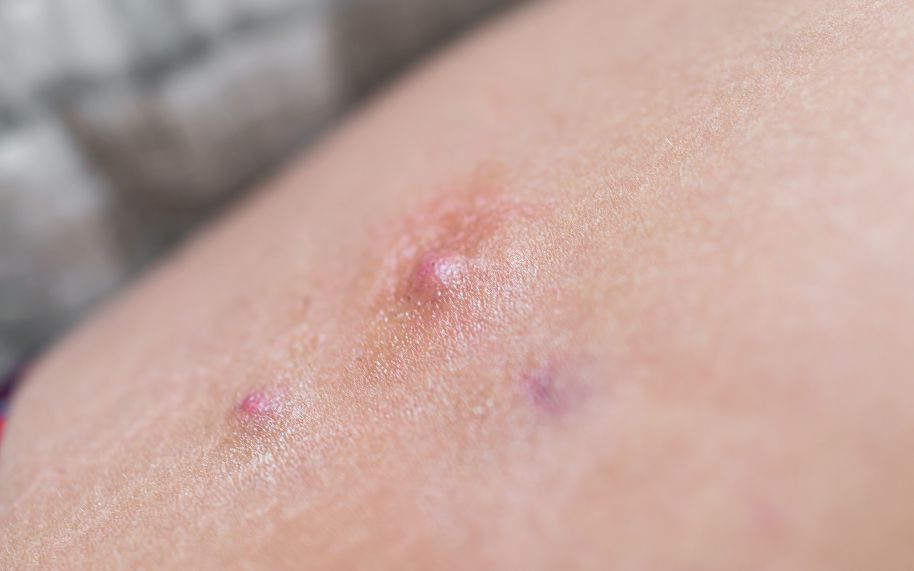
What do we mean by inadequately controlled hidradenitis suppurativa?
Assessing poorly or inadequately controlled hidradenitis suppurativa involves more than simply counting visible lesions. In clinical practice, the concept is broader.
Disease may be considered inadequately controlled when:
- flare-ups remain frequent despite treatment;
- pain persists even between flare-ups;
- lesions do not fully resolve;
- drainage is recurrent;
- new scars or draining tunnels continue to develop.
Even disease that might appear “moderate” based on visible extent can have a considerable functional and psychological impact when symptoms persist over time.
Why pain and recurrent drainage should not simply be accepted as inevitable
One of the most important messages in hidradenitis suppurativa care is that persistent pain and recurrent drainage should not automatically be regarded as unavoidable.
Current evidence indicates that appropriate treatment can:
- reduce inflammatory disease activity;
- reduce the frequency and severity of flare-ups in appropriately selected patients;
- help limit progression and structural damage when effective control is achieved.
The exact response varies between patients and treatments. However, accepting persistent symptoms without reassessing the disease may delay access to therapeutic strategies that could provide better control.
The consequences of persistent disease activity
Living for years with active hidradenitis suppurativa can have effects well beyond the skin.
Physical impact
- progression of lesions;
- persistent or chronic pain;
- development of complex draining tunnels;
- increasing permanent scarring.
Psychological and social impact
- social withdrawal;
- embarrassment and attempts to conceal lesions;
- difficulties with intimate relationships;
- anxiety, low mood or depressive symptoms.
For some patients, the psychological burden is related not only to the physical disease itself but also to the feeling that there are no other options or that their experience is not fully understood.

Reassessing treatment: when a different approach may be appropriate
If hidradenitis suppurativa continues to have a substantial impact on daily life, reassessing treatment does not mean starting again from the beginning. It means reviewing, on an individual basis, whether the current approach remains the most appropriate one.
Specialist assessment can take into account:
- current disease activity;
- impact on quality of life;
- the response to previous treatments;
- response to previous treatments; the patient’s needs and treatment priorities.
The objective is not only to reduce the number of flare-ups but to achieve sustained improvement in disease control and quality of life.
Current options for improving hidradenitis suppurativa control
There are now more treatment options for hidradenitis suppurativa than there were several years ago. Treatment should be selected by a dermatologist specialising in hidradenitis suppurativa and adapted to the individual patient and stage of disease.
Available approaches include:
- topical and systemic treatments;
- combined medical approaches;
- advanced injectable therapies in selected patients;
- surgical treatment, particularly when chronic lesions, draining tunnels or established scarring are present;
- long-term follow-up programmes.
Surgery should not necessarily be regarded as a failure of medical treatment. In appropriately selected patients and lesions, it is another therapeutic option that can play an important role in reducing disease burden and improving symptoms and quality of life.

Clinical research: an additional option in selected cases
In some patients, hidradenitis suppurativa remains clinically active despite appropriately selected treatment, with recurrent flare-ups, pain or drainage continuing to affect everyday life.
In these circumstances, clinical research may provide an additional route for exploring investigational treatment options.
En el International Center for Medical Research (ICMR) existen estudios clínicos activos en hidradenitis supurativa, centrados en evaluar tratamientos innovadores en personas con enfermedad activa o con un control insuficiente.
At the International Center for Medical Research (ICMR), clinical studies in hidradenitis suppurativa evaluate investigational treatments in people with active or inadequately controlled disease. Participation is always assessed individually and depends on the eligibility criteria for each study. Clinical trials are conducted within a regulated research framework and under specialist medical supervision. Participation does not guarantee clinical benefit and does not replace approved treatment when this remains the most appropriate option. For selected patients, discussing whether a clinical study may be relevant can form part of a comprehensive assessment of the available options.
A final message about poorly controlled hidradenitis suppurativa
Persistent hidradenitis suppurativa that continues to interfere with daily life should not automatically be accepted as inevitable. Although it is a complex chronic disease, medical, surgical and research options have expanded considerably in recent years.
When symptoms remain active, reassessing the diagnosis, disease activity and current treatment may help identify whether a different therapeutic strategy is appropriate.
Reliable information, specialist follow-up and an individualised treatment plan are central to improving long-term disease control and quality of life.
I invite you to share this article about poorly controlled hidradenitis suppurativa with anyone who may find it useful.
References
1. Zouboulis CC et al. Hidradenitis suppurativa/acne inversa: a practical framework for treatment optimization. J Eur Acad Dermatol Venereol.
2. Alikhan A et al. North American clinical management guidelines for hidradenitis suppurativa. J Am Acad Dermatol.
3. Ingram JR et al. Interventions for hidradenitis suppurativa. Cochrane Database Syst Rev.
4. Saunte DML, Jemec GBE. Hidradenitis suppurativa: advances in diagnosis and treatment. JAMA.
5. Gulliver W et al. Management of patients with hidradenitis suppurativa. Br J Dermatol.
