
Psoriasis primarily affects the skin, but it may also be associated with certain eye conditions. In this article, I explain which problems have been described most frequently, the symptoms they may cause and the possible mechanisms involved.
Although psoriasis is primarily recognised by its skin manifestations, it is a chronic immune-mediated inflammatory disease that, particularly in moderate-to-severe forms, may be associated with comorbidities such as psoriatic arthritis and increased cardiovascular risk.
One aspect that receives less attention in routine consultation, but which can understandably concern patients when symptoms appear, is eye health. Scientific studies have identified an association between psoriasis and several ophthalmological conditions. Most are not associated with severe loss of vision, but they may cause significant discomfort and affect quality of life.
As a dermatologist, my aim is for patients to understand psoriasis within their overall health. Based on the available scientific literature, I therefore want to explain what we currently know about the relationship between psoriasis and the eyes, which warning signs require medical assessment and how some dermatological treatments may affect ocular health.
Psoriasis and eye disease: what do the studies tell us?
Traditionally, ocular involvement in psoriasis was considered relatively uncommon. More recent retrospective studies and reviews, including work published in Piel (DOI: 10.1016/j.piel.2019.12.006), suggest that ophthalmological findings may be more frequent than previously recognised. Depending on the population studied, the definitions used and the methods of assessment, some studies have reported ocular abnormalities in 58% to 81% of patients. These figures should be interpreted cautiously, as they include a wide range of findings of differing clinical significance and do not mean that most people with psoriasis will develop serious eye disease.
Several inflammatory pathways involved in psoriasis may also be relevant to ocular tissues. Below, I review some of the eye manifestations that have been described, ranging from relatively common and usually mild conditions to those requiring more urgent assessment.
1. Eyelids: blepharitis and dermatitis
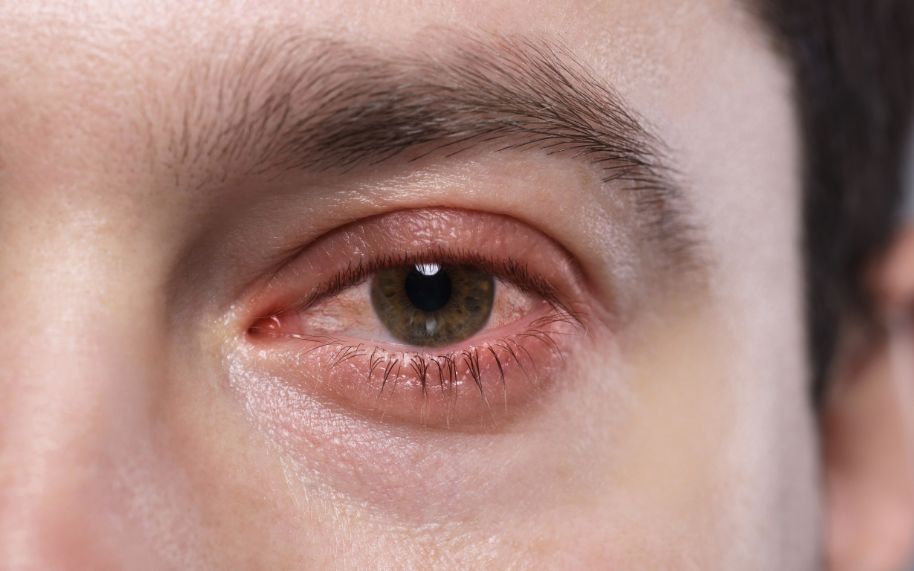
One of the more common areas of involvement is the eyelids. Some patients develop blepharitis, an inflammation of the eyelid margins that can cause redness, itching, scaling around the eyelashes and a gritty sensation in the eyes.
Changes in the eyelid skin and inflammation may also affect the function of the Meibomian glands, which produce the lipid component of the tear film and help prevent excessive evaporation. Dysfunction of these glands may therefore contribute to ocular surface symptoms in some patients.
2. Conjunctiva and cornea: dry eye
Non-specific conjunctival inflammation and dry eye disease are among the ocular symptoms described in people with psoriasis. Patients with dry eye may experience burning or stinging, a gritty or foreign-body sensation, fluctuating vision, and discomfort that becomes more noticeable after prolonged screen use.
If significant ocular surface dryness persists, the corneal surface may also become affected. This can include superficial punctate keratitis, in which small areas of damage develop on the corneal epithelium. Persistent or troublesome symptoms should be assessed by an ophthalmologist.
3. The uveal tract: uveitis
Uveitis is an inflammatory condition affecting structures within the eye and requires prompt medical attention. An association between psoriatic disease and uveitis has been well documented, particularly in people who also have psoriatic arthritis. Some studies have also examined associations with HLA-B27 positivity. Reported prevalence varies substantially between studies and patient populations, with some reviews describing rates in the range of approximately 7% to 20% in selected groups. These figures should not be interpreted as the expected risk for every person with psoriasis.
Symptoms that may suggest uveitis include a painful red eye, blurred or reduced vision, and marked sensitivity to light (photophobia). These symptoms warrant prompt ophthalmological assessment.
4. Psoriasis and age-related macular degeneration
More recent research is also investigating a possible association between psoriasis and age-related macular degeneration (AMD).
AMD affects the macula, the central area of the retina responsible for detailed central vision, and is an important cause of irreversible visual impairment in older adults. A large study in which I participated as a researcher, presented at the European Academy of Dermatology and Venereology (EADV) Congress 2025, followed almost 23,000 patients over approximately 10 years. The findings identified an association between psoriasis and a higher risk of developing AMD compared with the reference population. However, an observational association does not establish that psoriasis directly causes AMD.
One of the possible mechanisms being investigated is lipid dysregulation. Psoriasis is associated with cardiovascular and metabolic risk factors, including abnormalities in lipid metabolism. Lipid deposition and vascular processes are also relevant to the pathophysiology of AMD. These shared pathways provide a plausible area for further investigation, but the precise biological relationship between psoriasis and AMD has not yet been fully established.
Psoriasis treatments and possible effects on the eyes
In some cases, ocular symptoms may be related not to psoriasis itself but to particular treatments used in its management.
For this reason, appropriate medical follow-up and individual assessment of treatment benefits and possible adverse effects are important.
Some relevant considerations include:
Prolonged use of certain anti-inflammatory treatments around the eyes
Some topical medicines used for inflammatory skin disease require particular caution when applied for prolonged periods close to the eyes. Depending on the medicine, dose and duration, inappropriate or prolonged use may increase the risk of complications such as raised intraocular pressure, glaucoma or certain types of cataract. Treatment around the eyelids should therefore follow specific medical instructions.
Ultraviolet-based therapies
Phototherapy requires appropriate eye protection. Without suitable protective eyewear, ultraviolet radiation can cause ocular damage. Patients undergoing phototherapy should use the protective measures prescribed for the specific treatment and should not modify them without medical advice.
Systemic treatments that may cause mucosal dryness
Certain systemic medicines can cause dryness of the skin and mucous membranes. In some patients, this may contribute to dry-eye symptoms, sensitivity to light or difficulty tolerating contact lenses.
Certain conventional systemic treatments
Some systemic medicines have occasionally been associated with ocular adverse effects. The type and likelihood of these effects depend on the specific medication, so new visual symptoms should always be discussed with the prescribing doctor.
Advanced immune-targeted therapies
Advanced targeted therapies can achieve effective control of systemic inflammatory activity in many patients with psoriasis. Research is investigating whether controlling inflammation may also influence the risk of certain inflammatory comorbidities, including some ocular conditions. However, these treatments should not be considered proven to protect the eyes or prevent eye disease. Ocular inflammatory events have also been reported with some immune-targeted treatments, although their relevance and frequency vary according to the specific medicine. Any new visual symptoms developing during systemic treatment should therefore be medically assessed.
Eye symptoms in everyday practice: when should you seek medical advice?
Not everyone with psoriasis will develop eye problems. However, persistent ocular symptoms should not simply be ignored.
Consider discussing them with your ophthalmologist, GP or dermatologist if you repeatedly experience:
- a gritty or foreign-body sensation;
- persistent red eyes;
- swollen or crusted eyelids; recurrent burning or ocular discomfort; persistent dry-eye symptoms.
Criterios de derivación urgente: Debes acudir a urgencias oftalmológicas si presentas:
- Ojo rojo que duele (no solo pica).
- Sudden or significant loss of vision.
- A sudden increase in floaters or flashes of light.
- Marked photophobia, in which ordinary light becomes painful.
Psoriasis and vision problems: conclusions
Psoriasis is associated with several conditions beyond the skin, and the scientific literature suggests that certain ocular disorders may occur more frequently in people with psoriatic disease. Conditions affecting the eyelids and ocular surface are among the more commonly described manifestations, while uveitis represents a less frequent but clinically important association. Research is also investigating possible links with conditions such as age-related macular degeneration, although further evidence is needed to understand the underlying mechanisms and determine the clinical implications of this association.
Good psoriasis control remains important for reducing the burden of the disease and improving overall health, but it should not be assumed that psoriasis treatment automatically prevents cardiovascular, joint or ocular comorbidities. The most appropriate approach is comprehensive care: effective management of psoriasis, attention to associated conditions and prompt ophthalmological assessment when relevant eye symptoms occur. Collaboration between dermatologists and ophthalmologists can be particularly useful when ocular symptoms or confirmed eye disease coexist with psoriasis.
This article about psoriasis and vision problems does not replace individual medical assessment. I invite you to share it with anyone who may find the information useful.
References
Para la redacción de este artículo y mi actualización clínica constante, me baso en evidencia científica contrastada y estudios recientes publicados en revistas de impacto y congresos internacionales:
1. Sánchez-Velázquez A, Falkenhain-López D, Alcalde-Blanco L, Rivera-Díaz R. Manifestaciones oculares en la psoriasis. Piel. Formación continuada en dermatología. DOI: 10.1016/j.piel.2019.12.006.
2. European Academy of Dermatology and Venereology (EADV) Congress 2025. Research into the risk of developing age-related macular degeneration in patients with psoriasis. Cohort study of almost 23,000 patients investigating the association between psoriasis, lipid dysregulation and dry and wet AMD.
3. Rehal B, Modjtahedi BS, Morse LS, Schwab IR, Maibach HI. Ocular psoriasis. Journal of the American Academy of Dermatology. 2011;65:1202–1212. 1202-1212. (Estudio clásico de referencia sobre la fisiopatología ocular en la psoriasis).
4. Egeberg A, Khalid U, Gislason GH, Mallbris L, Skov L, Hansen PR. Association of psoriatic disease with uveitis: a Danish nationwide cohort study. JAMA Dermatology. 2015;151:1200–1205.
