

Advanced therapies are not only for severe psoriasis. Learn when they may also be considered.
For many years, the prevailing view was that the most advanced treatments for psoriasis should be reserved exclusively for patients with severe or very extensive disease. It is understandable that many people still think this way, because for a long time this was the predominant approach in clinical practice.
However, we now know that this view is too limited.
More recently, through the International Psoriasis Council (IPC), an international group of psoriasis experts of which I am a member, recommendations have been updated to incorporate an important principle: psoriasis should not be assessed solely according to the amount of skin affected. We must also consider the real impact of the disease on the patient’s life, an inadequate response to previous treatments, and involvement of high-impact areas such as the hands, feet, face, scalp or genital area.
There is, however, an important distinction that I think is essential to explain clearly: one thing is for recommendations to change, and another for those changes to be applied consistently in everyday clinical practice. In many settings, psoriasis is still assessed too heavily on the basis of disease extent alone. This is precisely why I think it is important to discuss this issue.
What has changed in the way treatment decisions are made?
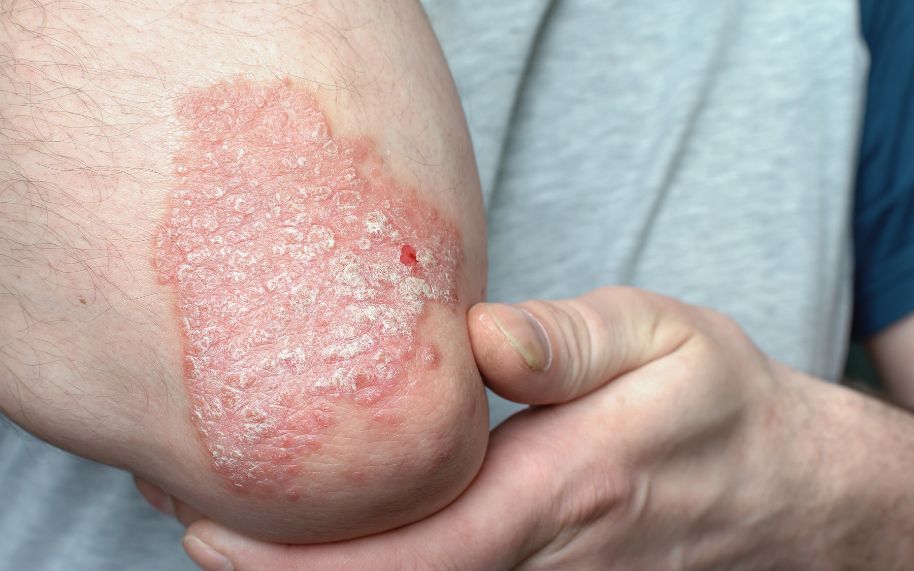
For many years, psoriasis severity was assessed mainly according to the percentage of body surface area affected. If there were numerous plaques or extensive involvement, the disease was considered more severe. If only a small area of skin was affected, psoriasis tended to be regarded as mild, even when it had a substantial impact on the patient.
This approach has an obvious limitation: it does not always reflect the patient’s actual experience of the disease.
A small lesion in a relatively inconspicuous area is not the same as psoriasis affecting the hands, face, genitals or scalp. Similarly, limited but persistent psoriasis that requires constant topical treatment without achieving adequate control is not equivalent to more extensive psoriasis that is well controlled.
For this reason, in recent years we have moved towards a more comprehensive and clinically meaningful assessment of the disease. We now know that, when considering whether a patient may benefit from advanced psoriasis treatments, extent is not the only factor that matters.
We should also take into account:
- whether topical treatments have failed;
- whether psoriasis affects high-impact areas;
- whether it has a significant effect on quality of life;
- whether the disease remains poorly controlled despite standard treatment.
Psoriasis is not always ‘mild’ simply because it affects a small area
This is probably one of the most common misconceptions we encounter.
Some patients have only a small area of affected skin but have lived for years with psoriasis that is highly symptomatic, very visible or significantly limiting. In some cases, they have tried one topical treatment after another, experiencing only partial improvement followed by repeated flare-ups, and have gradually come to regard this as something they simply have to accept.
For example:
- psoriasis on the hands can affect work, social interaction and everyday tasks;
- psoriasis on the face can have a substantial emotional impact;
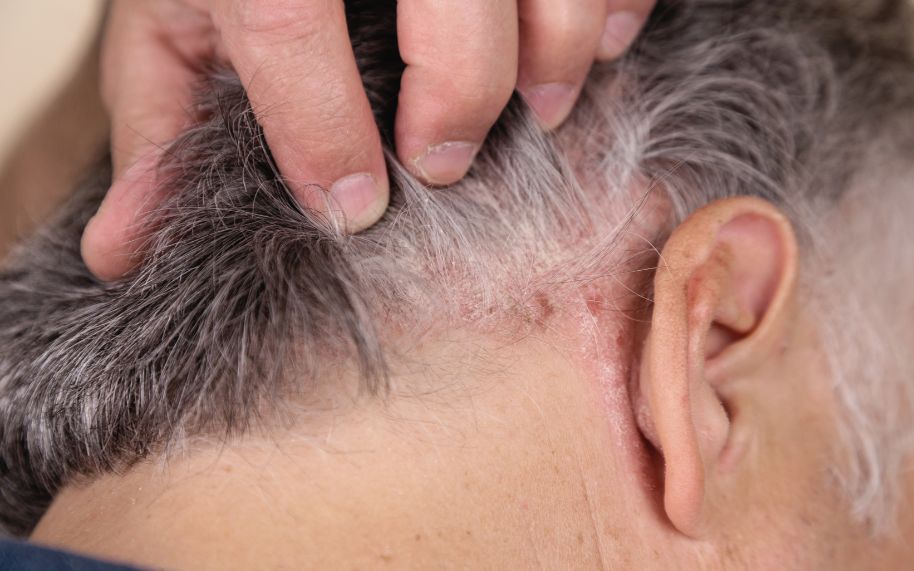
- psoriasis on the scalp can be highly visible, persistent and difficult to manage;
- psoriasis in the genital area can significantly affect wellbeing and intimate relationships;
- psoriasis on the feet can interfere with something as basic as walking comfortably.
In all of these situations, simply describing the condition as ‘mild psoriasis’ because only a small surface area is involved can be misleading.
What do current international recommendations say?
Within the International Psoriasis Council, we have worked specifically to update this way of assessing psoriasis.
Current recommendations no longer restrict advanced treatments to patients with very extensive disease. They also recognise patients who, despite having limited skin involvement, present with factors such as:
- failure of topical treatments;
- involvement of high-impact areas;
- a significant effect on quality of life;
- persistent disease despite apparently appropriate management.
This represents an important shift because it places the patient’s actual experience at the centre of treatment decisions. The question is not simply how much skin is affected, but how the patient is living with the disease and whether the current treatment strategy is genuinely sufficient.
International recommendations and real-world practice do not always progress at the same pace
I would like to emphasise one point that I consider particularly important.
The fact that recommendations have changed does not mean that these changes have already been adopted uniformly across all healthcare settings. In everyday practice, many patients still fall into a type of ‘grey area’: their psoriasis is not very extensive, but it is also not adequately controlled.
These are patients who:
- do not achieve adequate disease control;
- remain dependent on continuous topical treatment;
- have lesions in particularly difficult or high-impact areas;
- or experience substantial disruption to everyday life without this leading to a meaningful reassessment of treatment.
This is not necessarily due to a lack of interest or appropriate care. Clinical practice sometimes takes time to fully incorporate changes that have already been reflected in scientific evidence and international consensus.
How this fits with my approach to psoriasis care
For me, this development is fully consistent with the way I have approached psoriasis in clinical practice for many years.
When I assess a patient, I do not base my evaluation solely on the extent of the plaques. I also consider:
- the location of the psoriasis;
- its impact on quality of life;
- the response to previous treatments;
- the presence of comorbidities;
- and the overall clinical context of the disease.
This forms part of a more current and comprehensive approach to psoriasis. The aim is not simply to clear visible plaques, but to achieve good disease control and reduce the impact of psoriasis on the patient’s life.
For this reason, when I assess whether someone may benefit from an advanced treatment, I do not simply ask whether their psoriasis is ‘very extensive’. I ask whether it is adequately controlled, whether it is having a significant impact on the patient and whether continuing with the same treatment strategy remains appropriate.
The aim is not to treat more, but to treat better
I consider this point essential.
Saying that more patients may benefit from advanced therapies does not mean that treatment should automatically become more intensive. The aim is not to overtreat, nor should the same approach be applied to every patient.
The objective is to individualise treatment more effectively.
The key is not to exclude patients who, although they may not meet a traditional definition of ‘severe psoriasis’, still have disease that is poorly controlled, significantly limiting or particularly relevant because of its location or impact.
In other words, the aim is not to treat more, but to treat better and at the appropriate time.
An important message for patients
If you have psoriasis and have been thinking something along the lines of:
- ‘mine is not severe enough’;
- ‘I only have a small amount of psoriasis, so I just have to live with it’;
- ‘because it only affects a small area, there will not be any other treatment options’;
it may be worth reconsidering this.
We now know that advanced psoriasis treatments are not only for severe or very extensive disease. They may also be considered in patients with less extensive psoriasis that remains poorly controlled, affects high-impact areas or has a significant effect on quality of life.
This is important because some patients continue to live with inadequately controlled psoriasis simply because their case has not been reassessed using this more current approach.
In summary: advanced therapies are not only for severe psoriasis
For many years, advanced psoriasis treatments were associated almost exclusively with the most severe cases. However, current evidence and international recommendations support a more nuanced and clinically useful approach: treatment decisions should not be based solely on the extent of the disease.
Previous treatment failure, the location of lesions and the impact psoriasis has on the patient’s everyday life also matter.
Through the International Psoriasis Council, an international group of which I am a member, we have contributed to updating this approach. In my own clinical practice, this way of understanding psoriasis is fully consistent with how I have assessed and managed patients for many years.
Because the key question is not simply whether your psoriasis is severe. The key question is: is it genuinely well controlled?
If the answer is no, it may be appropriate to reassess the treatment strategy.
Knowing that advanced therapies are not restricted to severe psoriasis may make an important difference for people living with inadequately controlled disease. I therefore invite you to share this information with anyone who may find it useful.
