
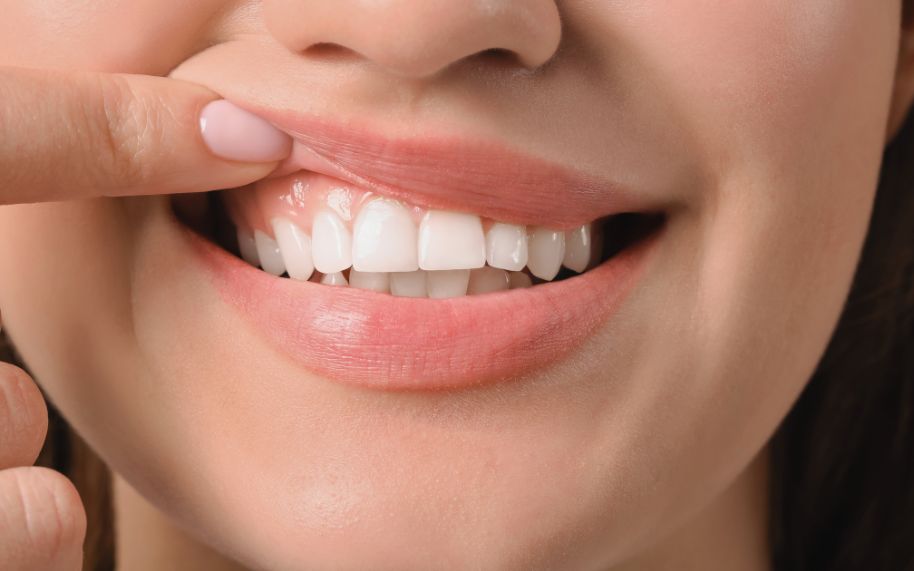
Learn about the association between gum health, psoriasis and periodontitis, and why looking after both oral and skin health is important.
For many years, psoriasis was considered primarily a dermatological disease. We now understand that it is a chronic immune-mediated inflammatory disease that may have implications beyond the visible skin lesions. One of the less widely known associations, but one that has attracted increasing scientific interest, is the relationship between psoriasis and oral health, particularly periodontitis, a chronic inflammatory disease affecting the gums and the tissues and bone that support the teeth.
It may seem surprising, but science is showing that what happens in your mouth could influence what happens in your skin.
Psoriasis and inflamed gums: what do they have in common?
Psoriasis and periodontitis are both characterised by inflammatory processes involving the immune system. Inflammatory mediators such as TNF-α, IL-1, IL-6 and IL-17 have been studied in both conditions. These cytokines play an important role in immune regulation and inflammatory responses.
This biological overlap has led researchers to investigate whether the two diseases may share certain inflammatory mechanisms and risk factors. However, this does not mean that periodontitis directly causes psoriasis or that psoriasis necessarily causes periodontal disease.
What does the scientific evidence say?
Several studies have investigated the association between psoriasis and gum health:
- A meta-analysis by Antal et al. (2022) published in the Journal of Clinical Periodontology found that people with psoriasis had a higher risk of periodontitis than people without psoriasis.
Source: J Clin Periodontol. 2022;49(2):132–141.
- A Scandinavian study led by Skudutyte-Rysstad et al. (2014) involving more than 300 patients found that moderate-to-severe periodontitis was more common among people with psoriasis, even after accounting for factors such as smoking.
Source: BMC Oral Health. 2014;14:139.
- Some preliminary studies have suggested that treating periodontal disease may reduce certain systemic inflammatory markers. Whether periodontal treatment can also improve the clinical course of psoriasis remains uncertain and requires further investigation.
Source: Seyedmajidi M et al., J Dermatol Treat. 2019.
Taken together, these findings support an association between psoriasis and periodontal disease, possibly related to shared inflammatory pathways and common risk factors. Further research is needed to determine the precise nature and clinical implications of this relationship.
Why oral health is particularly important if you have psoriasis
Bleeding, swollen or inflamed gums are not simply a cosmetic issue or a source of discomfort. They may be signs of periodontal disease and should be assessed appropriately. People with psoriasis already have a higher prevalence of certain cardiovascular and metabolic risk factors, and good oral health forms part of maintaining overall health.
Key recommendations
- Attend regular dental check-ups according to the frequency recommended by your dentist.
- Maintain careful oral hygiene, including effective toothbrushing and interdental cleaning with floss or interdental brushes when appropriate. Use mouthwashes only when recommended by your dental professional, particularly if your oral tissues are sensitive.
- Avoid smoking, which is an important risk factor for periodontal disease and is also associated with poorer health outcomes in psoriasis.
- Tell your dentist that you have psoriasis and inform them about any medication you are taking.
- Seek dental assessment if you develop persistent gum bleeding, gum swelling, tooth mobility or halitosis.
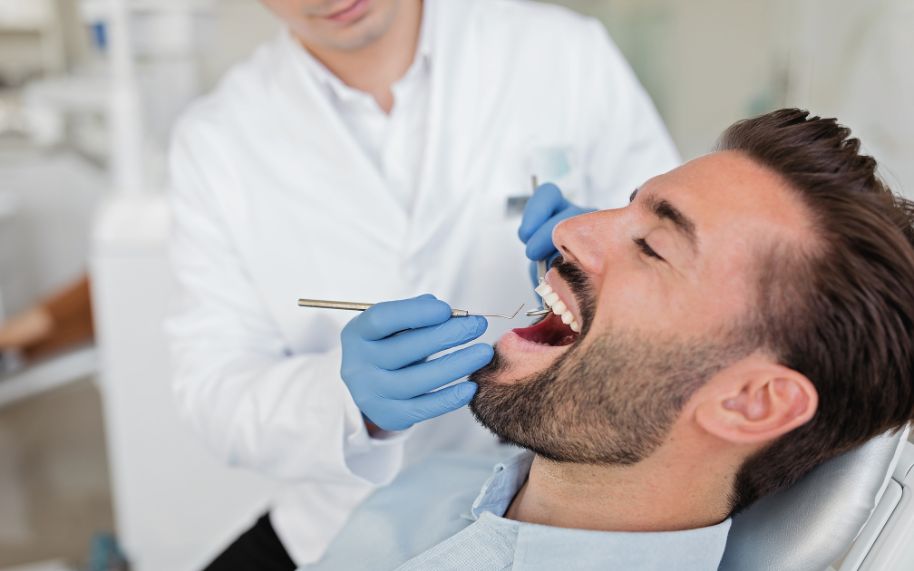
A comprehensive approach: when dermatologists and dental professionals work together
The association between oral health and psoriasis highlights the value of coordinated healthcare. In chronic inflammatory diseases, communication between healthcare professionals can help identify associated problems earlier and ensure that each condition is treated appropriately.
Dermatologists should be aware of relevant oral health problems in people with psoriasis, while dentists and periodontists may benefit from knowing when a patient has psoriasis or is receiving systemic treatment.
Patients should also be informed about this association so that they understand the importance of maintaining good oral health alongside appropriate dermatological care.
Looking beyond the skin
Psoriasis can be associated with conditions affecting different aspects of health, including the joints, cardiovascular and metabolic systems and, according to growing evidence, periodontal health. For this reason, taking a comprehensive approach to psoriasis means looking beyond visible skin lesions.
Maintaining good oral hygiene and treating periodontal disease when present are important for dental and general health. Whether doing so directly reduces psoriasis activity or the frequency of flare-ups has not yet been established and should not be assumed.
Gum health, psoriasis and periodontitis: in summary
The association between psoriasis and periodontitis is supported by a growing body of scientific evidence. People with psoriasis appear to have a higher prevalence of periodontal disease, and both conditions share certain inflammatory pathways and risk factors. However, association does not establish a direct causal relationship, and further research is needed to determine whether treating one condition has a clinically meaningful effect on the other. For people with psoriasis, maintaining good oral health, attending appropriate dental follow-up and treating periodontal disease when present should form part of a broader commitment to overall health.
I invite you to share this article about the relationship between gum health, psoriasis and periodontitis with anyone who may find it useful.
