
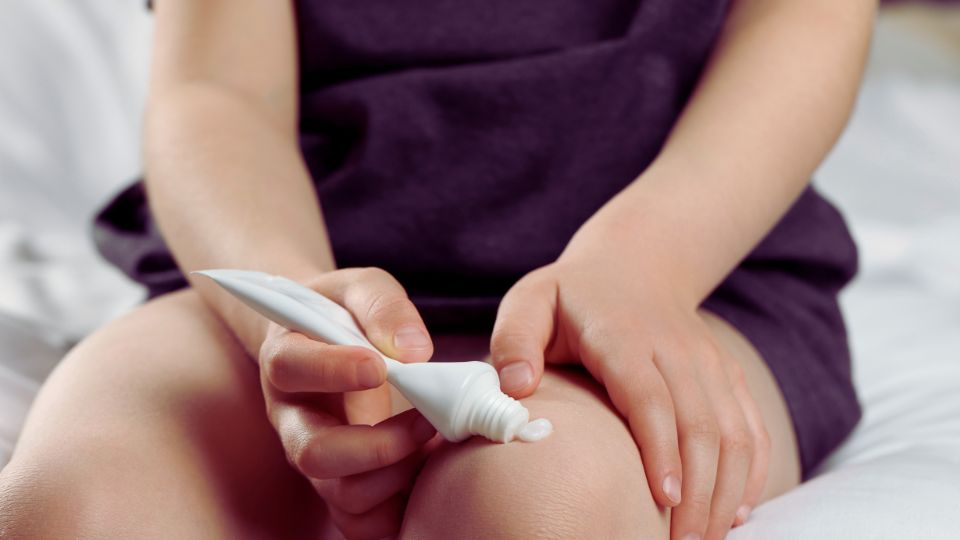
Parents often come to my consultation with concerns about childhood psoriasis and questions about how it should be managed and treated. In this article, I answer some of the questions I encounter most frequently in clinical practice.
Psoriasis is a chronic immune-mediated inflammatory disease that primarily affects the skin, although it can also have implications beyond the skin. It can occur at any age, including childhood.
A significant proportion of people with psoriasis develop the disease during childhood or adolescence. This highlights the importance of recognising possible early signs so that an appropriate diagnosis can be made and treatment introduced when necessary.
Good management of childhood psoriasis begins with education. Understanding what the disease is, how it may affect a child and which treatment options are available enables families to make informed decisions about their child’s care and seek appropriate support when needed.
In this article, I will review some of the key aspects of childhood psoriasis, with the aim of helping children and their families understand the disease and manage it as effectively as possible.
Risk factors and causes of psoriasis in children
Psoriasis is a complex disease whose exact causes are not yet fully understood. It is thought to result from an interaction between genetic susceptibility, immune dysregulation and environmental factors. As in adults, several factors may influence the development and clinical course of psoriasis in children.
The role of genetics in childhood psoriasis
Genetic predisposition plays an important role. Children with a parent or close relative who has psoriasis have a higher likelihood of developing the disease than those without a family history. Researchers have identified a number of genetic variants associated with psoriasis, confirming that inherited susceptibility is an important factor, although genetics alone does not determine whether an individual child will develop the condition.
The immune system and childhood psoriasis
Psoriasis is an immune-mediated inflammatory disease in which dysregulated immune activity contributes to inflammation and accelerated skin-cell turnover. In children, certain infections can sometimes precede or trigger the appearance of psoriasis, particularly guttate psoriasis. A well-recognised example is streptococcal throat infection, which can be associated with the onset of guttate psoriasis in susceptible children.
Environmental factors involved in childhood psoriasis
Several environmental factors may contribute to the onset or worsening of psoriasis in susceptible children. As mentioned above, infections — particularly some throat infections — can be relevant in certain cases.
Skin injury, such as cuts, grazes, insect bites or sunburn, may also lead to the appearance of psoriasis lesions in previously unaffected skin through the Koebner phenomenon.
Psychological stress may also coincide with worsening disease activity in some children, although the relationship varies between individuals and should not be considered a universal trigger.
Environmental conditions such as cold or dry weather may aggravate dryness, itching and irritation and can make psoriasis more uncomfortable during certain periods of the year.
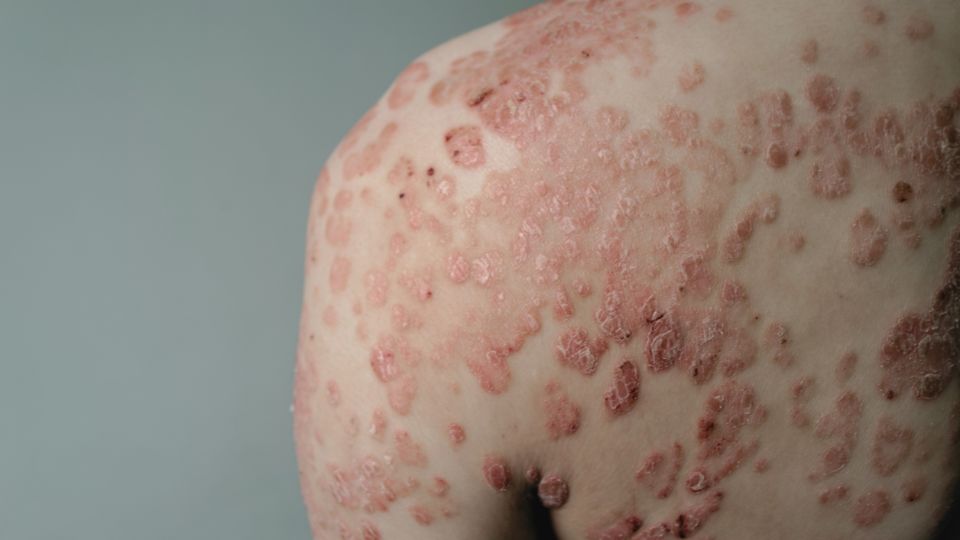
Signs and symptoms that may indicate psoriasis in children
Childhood psoriasis can present differently from one child to another, but there are several common features that may help identify the disease.
Typical manifestations include areas of inflamed, red and scaly skin. These lesions can appear anywhere on the body, although the scalp, knees, elbows and trunk are common locations. Psoriasis may also cause itching, tenderness or discomfort. In younger children, persistent scratching can further irritate the skin and may occasionally lead to excoriation or secondary infection.
Compared with adults, children are relatively more likely to develop guttate psoriasis, which is characterised by multiple small, drop-shaped lesions on the trunk, arms and legs. This form of psoriasis may develop after infections such as streptococcal pharyngitis.
It is also important to be aware of less common but clinically relevant manifestations, including changes in the nails such as pitting, thickening or discolouration. Musculoskeletal symptoms may occasionally occur and warrant assessment for juvenile psoriatic arthritis or another inflammatory joint condition. Persistent joint swelling, pain or stiffness should therefore be discussed with a doctor.
If a child develops symptoms suggestive of psoriasis, assessment by a dermatologist is advisable. An accurate diagnosis is the first step towards appropriate disease management.
Dermatological treatments available for childhood psoriasis
The important point is that there are now several effective treatment options for childhood psoriasis.
Treatment aims to reduce inflammation, relieve symptoms and achieve good long-term disease control. Because psoriasis varies substantially between children in terms of severity, location and impact, treatment should be individualised according to the child’s age, clinical presentation and specific needs. The dermatologist will assess which option is most appropriate in each case.
Topical treatments
Topical therapies are commonly used as first-line treatment for mild and some moderate forms of childhood psoriasis. These include creams, ointments, lotions and other formulations applied directly to affected skin to reduce inflammation, scaling and discomfort.
Phototherapy
Controlled ultraviolet treatment, particularly narrowband UVB phototherapy, may be considered in selected children when topical treatments have not provided adequate control or when the extent or location of the disease makes phototherapy appropriate. Treatment is delivered under medical supervision and according to a carefully defined schedule.
Systemic medicines
Systemic treatment may be considered in children with moderate-to-severe psoriasis, significant disease burden, involvement of high-impact areas or inadequate response to other treatments. These medicines act throughout the body and may be given orally or by injection. The choice depends on the child’s age, disease characteristics, previous treatment response and the individual safety profile of each medicine.
Advanced therapies
Advanced targeted therapies, including certain biological medicines, act on specific immune pathways involved in psoriasis. Several of these treatments are approved for use in children and adolescents above particular ages and in defined clinical circumstances. They may be considered when the disease is moderate to severe, has a significant impact on quality of life or has not responded adequately to other appropriate treatments. These therapies can achieve high levels of disease control in appropriately selected patients, but suitability depends on the individual child and on the specific medicine.
All systemic and advanced treatments for childhood psoriasis require appropriate dermatological assessment and follow-up.

Practical advice for everyday life with childhood psoriasis
Living with childhood psoriasis can be challenging for both children and their families. However, with appropriate treatment, support and everyday skin care, many children can achieve good disease control and continue their usual daily activities. Below are some practical measures that may help.
Be aware of possible psoriasis triggers
Identifying factors that appear to coincide with flare-ups can sometimes be useful. Possible examples include infections, skin injury, certain medicines and periods of significant stress. However, triggers vary considerably between children, and not every flare-up has an identifiable cause.
Look after the child’s skin
A regular skin-care routine can help maintain the skin barrier and reduce dryness and scaling. Short baths or showers with lukewarm water, gentle cleansers and regular use of appropriate moisturisers or emollients may be helpful. Products containing fragrances or other ingredients that irritate the child’s skin should be avoided when they cause symptoms.
Help the child understand psoriasis
Explaining psoriasis in an age-appropriate way can help children understand what is happening to their skin and participate in their own care as they grow older. It can also be useful to provide appropriate information to teachers or other caregivers when psoriasis affects school life or requires treatment during the day. Helping those around the child understand that psoriasis is not contagious can also reduce misunderstanding and stigma.
Do not overlook psychological wellbeing
The emotional impact of childhood psoriasis should not be underestimated. Visible lesions, itching, treatment routines or comments from other people can affect self-confidence and emotional wellbeing. These concerns may become particularly important during adolescence, when body image and social relationships often take on greater significance.
Creating a supportive environment in which the child feels able to discuss the disease openly is important. If psoriasis is having a substantial effect on mood, self-esteem, school attendance or social life, psychological support may be appropriate.
Encourage a healthy diet and regular physical activity
Healthy lifestyle habits are beneficial for all children, including those with psoriasis. A balanced dietary pattern, such as a Mediterranean-style diet, and regular age-appropriate physical activity support overall cardiovascular and metabolic health. There is no specific diet that treats childhood psoriasis, and individual foods should not generally be removed from a child’s diet unless there is a clear medical or nutritional reason to do so. Unnecessary dietary restrictions can be particularly problematic during growth and development and should therefore be discussed with a paediatrician, dermatologist or dietitian when necessary.
Practical measures for managing psoriasis at home
Alongside prescribed treatment and everyday skin care, some simple measures may help relieve discomfort during a flare-up. Cool compresses may help soothe itchy or irritated skin. Keeping the child’s fingernails short can also reduce skin damage caused by scratching. These measures are supportive and should not replace prescribed psoriasis treatment.
Attend regular dermatology reviews
Regular dermatology follow-up allows disease activity, treatment response and possible side effects to be assessed over time. Treatment can then be adjusted as the child grows or as the pattern of psoriasis changes. These appointments also provide an opportunity for families to discuss questions or concerns and review new treatment options when clinically relevant.
Conclusions on childhood psoriasis
Childhood psoriasis can be effectively managed in many patients with an appropriately individualised treatment strategy. Every child is different, and a treatment that works well for one patient may not be the most appropriate option for another. For this reason, management should be personalised and adaptable, taking into account not only the physical manifestations of psoriasis but also its effect on comfort, everyday activities and psychological wellbeing.
Close collaboration between dermatologists, children, families and, when needed, other healthcare professionals such as paediatricians, rheumatologists, psychologists or dietitians can help achieve good long-term disease control. The aim is for children with psoriasis to be able to participate fully in everyday life while receiving treatment that is appropriate for their age, disease and individual circumstances.
If you found this article on the management and treatment of childhood psoriasis useful, I invite you to share it with other families who may benefit from the information.
