

If you have psoriasis and are considering a tattoo, piercing or microblading, it is understandable to have a number of questions: Could it make my psoriasis worse? Is there a greater risk of psoriasis lesions appearing in the area? Could the tattoo or pigment be affected? What about my medication?
In this article, I address some of the most common questions and concerns surrounding tattoos, piercings and microblading in people with psoriasis.
Which layers of the skin are involved in these procedures?
The skin is made up of three main layers: the epidermis, dermis and hypodermis.
Epidermis: the outer layer
The epidermis is the outermost layer of the skin and undergoes continuous cell renewal. In psoriasis, this renewal process is considerably accelerated in affected skin, contributing to the characteristic accumulation of skin cells and formation of plaques.
Tattooing, piercing and microblading all involve passing through or disrupting the epidermal barrier.
Dermis: the middle layer
The dermis lies beneath the epidermis and is considerably thicker. Tattoo pigment is deposited within the dermis. Microblading pigment is also placed superficially within the skin, generally reaching the superficial dermis. Piercings pass through different depths of tissue depending on their location.
Hypodermis: the deeper layer
The hypodermis, or subcutaneous tissue, lies beneath the dermis. Most conventional tattoos and microblading procedures do not intentionally reach this layer, although the depth involved in piercings varies depending on the anatomical area.
Risks of tattoos, piercings or microblading if you have psoriasis
If you have psoriasis and are considering a tattoo, piercing or microblading procedure, there are several potential issues to take into account.
Koebner phenomenon
The Koebner phenomenon describes the appearance of lesions characteristic of certain skin diseases, including psoriasis, in previously unaffected areas following skin trauma or injury.
During tattooing, needles repeatedly penetrate the skin and produce controlled microtrauma. In some people with psoriasis, this can trigger the Koebner phenomenon and lead to the development of new psoriasis lesions in the tattooed area.
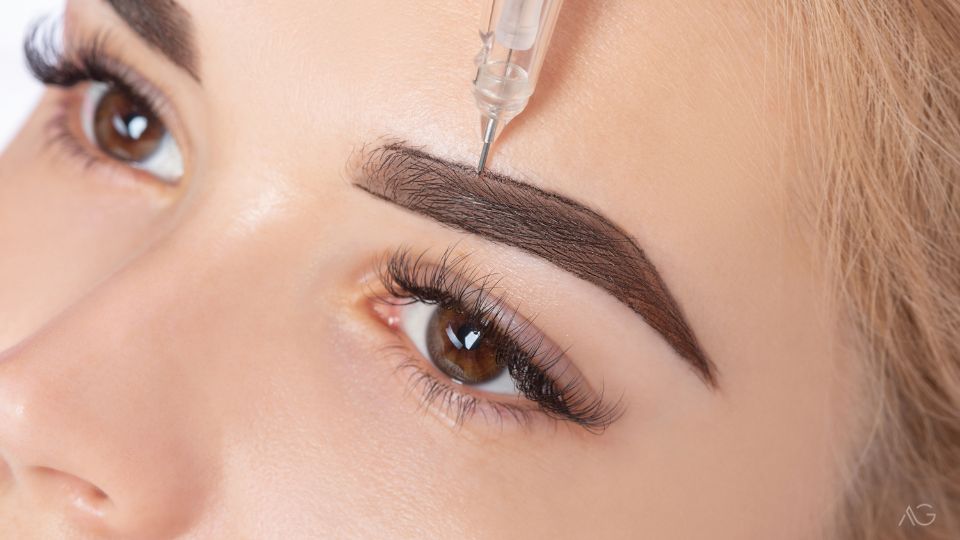
Similarly, microblading involves making multiple small superficial incisions in the skin to introduce pigment. This trauma may also trigger psoriasis lesions in susceptible individuals, including around the eyebrows.
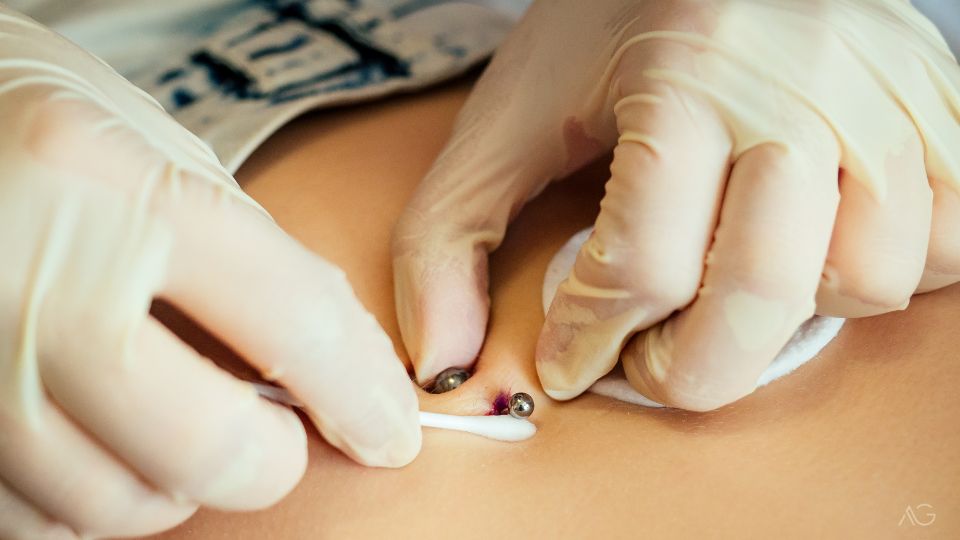
The same principle applies to piercings. Because the procedure involves puncturing the skin, psoriasis lesions may occasionally develop around the affected area as a result of the Koebner phenomenon.
Risk of infection
Tattooing, piercing and microblading all disrupt the skin barrier and therefore carry a risk of infection, regardless of whether a person has psoriasis. In people with psoriasis, this risk needs to be assessed individually. Active psoriasis at the site of the procedure, damage to the skin barrier, certain systemic treatments and inadequate aftercare may all influence the risk of complications. This is one reason why good hygiene and appropriately regulated premises are essential.
Allergic or irritant reactions
Tattoo pigments, metals used in piercings and products applied during or after these procedures can occasionally cause allergic or irritant reactions. Having psoriasis does not necessarily mean that these reactions will occur, but distinguishing irritation, allergy and psoriasis activity may sometimes be more difficult when they develop in the same area.
Inflammation and the effects of skin trauma
Psoriasis is a chronic inflammatory disease. The trauma and irritation caused by tattoos, piercings and microblading may contribute to local inflammation and, in susceptible patients, may trigger psoriasis through the Koebner phenomenon.
Healing
Healing after a tattoo, piercing or microblading procedure varies from person to person. Psoriasis itself does not mean that every wound will heal abnormally. However, active psoriasis in the area, the development of Koebner lesions, infection or certain treatments may complicate the healing process. In tattoos and microblading, inflammation or psoriasis developing during healing may also affect the final appearance of the pigment.
Can tattoos or microblading make psoriasis monitoring or treatment more difficult?
Psoriasis is characterised by inflammatory, red and scaly skin lesions, and tattoos or microblading can sometimes make changes in the skin more difficult to assess.
Reduced visibility: Pigment may make subtle changes in colour, redness or texture more difficult to appreciate, particularly in heavily tattooed areas.
Identifying flare-ups: If psoriasis develops within a tattooed area, pigment may make some changes in the appearance of the skin less obvious.
Monitoring treatment response: Because treatments for psoriasis often reduce redness, scaling and plaque thickness, extensive tattooing may sometimes make visual assessment of these changes more difficult.
Reactions to pigments or other materials: Tattoo pigments or piercing materials can occasionally cause inflammatory or allergic reactions. In some cases, these may initially resemble or coexist with psoriasis lesions.
Topical treatments: These topical treatments can generally still be used on tattooed skin once the tattoo has fully healed, provided that they are clinically appropriate. If psoriasis is affecting a newly tattooed or recently microbladed area, however, treatment should be discussed with a dermatologist so that both the skin condition and the healing procedure can be managed appropriately.
Is my tattoo more likely to fade if I have psoriasis?
Psoriasis does not normally make a tattoo disappear, as permanent tattoo pigment is deposited in the dermis.
However, if psoriasis develops over a tattoo, scaling, inflammation and changes in the surface of the skin may temporarily alter the way the tattoo looks.
The healing process and certain topical products may also influence the appearance of a recent tattoo. For this reason, treatment applied directly to newly tattooed skin should be discussed with the dermatologist and the professional who performed the procedure. If you are taking systemic medication for psoriasis, this should also be reviewed before having a tattoo. The relevance of individual treatments depends on the medicine, your health and the type of procedure, so medication should not be stopped or modified without medical advice.
What about microblading? Can psoriasis affect how long it lasts?
Microblading is a semi-permanent pigmentation technique in which pigment is introduced superficially into the skin, usually in the eyebrow area.
Unlike a permanent tattoo, microblading is designed to fade gradually over time and often requires maintenance sessions.
If psoriasis develops in the eyebrow area, inflammation, scaling and changes in epidermal turnover could theoretically alter the appearance or persistence of the pigment.
Topical treatments used in this area may also influence how the microblading looks over time, depending on the product and how it is used. However, there is limited specific evidence on how psoriasis affects the longevity of microblading, so it is difficult to predict precisely what will happen in an individual patient.
Recommendations if you decide to have a tattoo, piercing or microblading
Speak to your dermatologist: Before making a decision, speak to your dermatologist specialising in psoriasis. If you are receiving treatment, your dermatologist can assess whether the procedure is appropriate at that time and whether there are any specific precautions to consider. Do not stop or alter prescribed medication without medical advice.
Choose appropriately regulated premises: Make sure the tattoo studio, piercing provider or aesthetic clinic complies with applicable hygiene, sterilisation and health and safety requirements.
Follow appropriate hygiene and aftercare: Good hygiene is essential before and after a tattoo, piercing or microblading procedure. Follow the aftercare instructions carefully to reduce the risk of infection and allow the skin to heal properly.
Consider the location carefully: Particular care may be appropriate in areas where psoriasis frequently occurs or where friction, moisture or repeated irritation are common. The suitability of a particular site should be assessed individually.
Avoid procedures directly over active psoriasis plaques: Tattooing, piercing or performing microblading directly through active psoriasis lesions is generally best avoided. Trauma to actively inflamed skin may aggravate the local disease, complicate healing and affect the final cosmetic appearance of the procedure. If you are considering any of these procedures, discussing the timing and location with your dermatologist beforehand can help assess the individual risks.
I invite you to share this article about tattoos, piercings and microblading in people with psoriasis with anyone who may find it useful.
